

Popular Japanese apparel company Uniqlo has teamed up with Kabuki management company Shochiku to produce a series of t-shirts, trousers and accessories using Kabuki costume pattern designs as well as well as kumadori make-up impression known as oshiguma. It makes a lot of sense to me: Kabuki costumes have great designs that look very ‘cool’ to the contemporary eye. So do Noh costumes, which served as models for Kabuki costumes in the early days. I hope that the Kabuki establishment will benefit from this mutual form of promotion, but I also ask myself why Noh is not doing this. It’s a rhetorical question: regardless of the more or less awkward attempts to popularise it, Noh remains an art for the elite. Its political system is elitarian, and so is the image it projects to the public. Uniqlo is a cheap fashion brand with a ‘pop’ international image. The two brands do not seem to go together. Most Noh people will agree with this, and rejoice in their elitarianism, leaving the cheap and pop stuff to Kabuki people. However some (a minority) Noh actors, especially the young generations, might disagree. This is the generation that will still be here in 30 years, and will experience the consequences of the current conservative policy enforced by the oligarchy of elders. What is more important? Maintain the elite as it is, or try to find new ways to get more people come to the half-empty Noh theatres?


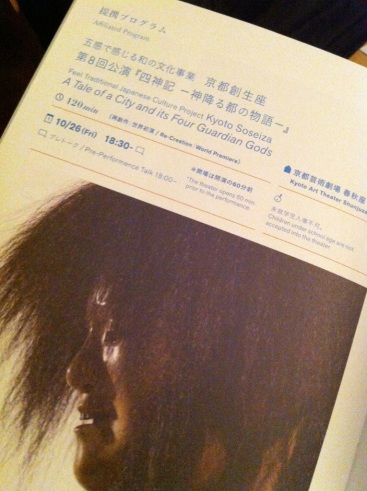 Last Friday I went to see A Tale of a City and its Four Guardian Gods, a Soseiza production that closed the Kyoto Experiment, performing arts festival 2012. The performance featured Kabuki and Noh actors interacting on stage. The venue was the Shunju-za, a full-fledged Kabuki theatre built within Kyoto Zōkei University. Before the staging of the play some of us who applied were taken to a backstage tour of the theatre. All I can say is: ‘holy cow!’ The theatre is unbelievable, and features a mawari butai rotating stage with two rectangular modules that can be lowered and raised independently, wiring for fly-over action, and of course a hanamichi. Japanese universities certainly do not lack funding for this kind of enterprise.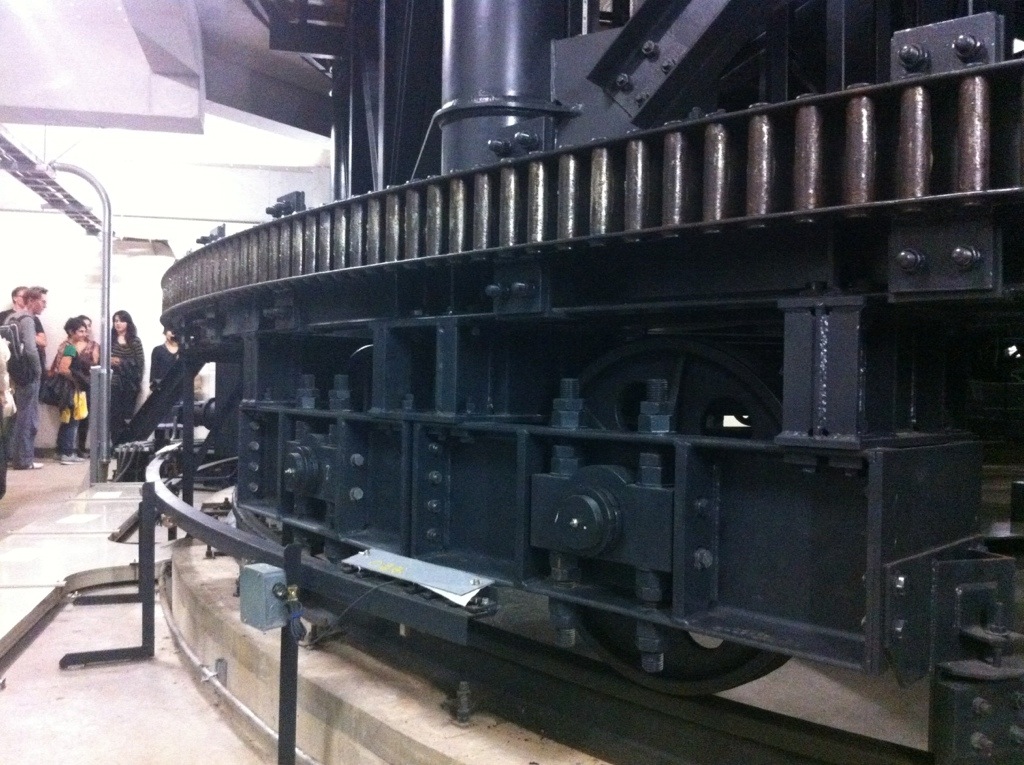
 The Noh Diaries