Technique is what is left when you turn off emotions. Knowing every step of the dance, every modulation of the chant, understanding the meaning of each word and movement… none of this is really helpful on stage unless you have real control of the switch between emotion and technique. This ability cannot be acquired through intellectual understanding. Odd as it may seem, I feel it is more of a physical condition than a mental one.
This is why there is no shortcut to true skill. No intensive workshop. No crash course. Physical practice requires time. A matter of choice, I guess.
Today I had okeiko with my teacher’s eldest son Udaka Tatsushige. He gave me precise instructions about various moments of the play which I need to improve. Among all suggestion there is one thing I need to be particularly aware of: if my movements are too dynamic or extreme, if they are too ‘expressive’, it will be to the detriment of the costume. Reflecting on this I realised how much the costume, along with the mask, already does a lot of the narration just by being there on stage. It is important to establish a good relationship with the costume, restraining your movement, compressing your energy. If your acting crosses the line, the costume will disappear, only your movements will be visible. The costume has been perfected through centuries to serve its expressive purpose on stage: let’s make sure it has enough room to say what it has to say.
Noh actors never should use their face. This also applies to those singing in the chorus. Arching your eyebrows during a lyrical passage, opening your eyes wide during a fierce passage, all this might be ‘natural’ (actually I don’t think it is) but it lets your emotions appear on your face. This is all too normal, too ‘everyday life’. It shows that you are not in control/aware of your face. It also distracts the audience. What is the reason why a Noh actor or chorus member should show their emotion to the audience? In Noh, there is no such reason. Keep your face still. Let the audience feel what they want to feel.
Walking is one of the fundamental elements of Noh. I like the appellation hakobi (carrying) rather than suriashi (sliding steps) because hakobi gives the idea of carrying a weight, which is indeed what you actually do when you walk this way. The movement of your body on the stage should be controlled and inexorable, like that of a heavy locomotive. Iron bars turn the wheels, but the vehicle above does not jolt.
Forget about learning difficult pieces, showy kata, and focus on walking. Spend a lot of time just walking back and forth. If your walking is good you have accomplished 50% of the overall performance.
A small piece of advice for those who practice Noh utai (chant). If your teacher’s voice is that of an elderly man, it doesn’t mean that you have to sound elderly, too. What I think the student should do when imitating the teacher’s chant is grasp its ‘essence’, focusing on melody and rhythm, if possible simplifying the ornaments and embellishments that you might hear and concentrating on the core of the chant. Listen to how young actors (of the same group) chant and try understand what the link between their young voices and that of your teacher is.
Remember that imitating requires a great deal of personal commitment.
Following up my previous post on the ‘speed of time’, I have resurrected this reflection, which has been sitting in my draft folder for a while… This post originally developed into another reflection on time and objectives, which I have cut as I would like to expand it somewhere else.
What is the value of time in Noh training?
Learning a ‘unit’ of Noh, be it a line or a movement, requires time. Just as much as a grammar rule requires time and practice in order to be absorbed and successfully used. A grammar rule of a second language could be explained and analysed in detail, it could be compared with a similar rule in our native language, but would this be enough to say that we are in command of that rule? The typical mistake of the inexperienced learner is using a piece of grammar, an idiomatic expression, a certain word, in a context that is not suitable for its use. In most cases, there is no way to learn the correct usage of a given expression if not by paying much attention when native speakers use it, and by attempting to use it, and learning from our mistakes. All in all, learning a language requires the necessary time for embodiment, not mere memorisation. Memorising the grammar book will not allow us to speak correctly.
What, then, is the purpose of learning something ‘intensively’ (i. e. concentrating one’s efforts over a short period of time)? What is the ‘intensive’ quality of time? What do we gain by that ‘intensive’ quality? In the case of Noh theatre, I think that time plays a crucial role in the learning process. There is much to say about this.
There are two main types of chant in Noh theatre: tsuyogin or ‘strong’, ‘dynamic’ chant and yowagin, or ‘weak’, ‘melodic’ style. As the name suggests, the first is powerful and energetic, while the second is melodic. Tsuyogin emphasises rhythm, while yowagin emphasises melody. In Yashima, the play I am memorising at the moment, tsuyogin is used to describe battle scenes, while yowagin is used to render more poetic descriptions. While yowagin consists of a melody, tsuyogin basically centres on a single tone, pitching up as the phrase progresses, which is then embellished by a number of glides. In my experience, tsuyogin is the hardest type of chant to master.
To the difficulty of chanting well, another problem adds up: that of memorisation. Yowagin melodic chant gives a lot of cues because it follows a recognisable melody. Since we are children we have been taught how to turn sentences or lists of names into little songs in order to memorise better. Same with yowagin. However tsugyogin relies almost entirely on rhythm, and its embellishments do not always follow a predictable pattern. Hence memorisation cannot be helped by melodic cues. In addition, tsuyogin is often chanted fast, as in the narration of a lively action scene.
I don’t know whether this applies to all Noh practitioners, but I find the difference in the effort I have to put in memorising astonishing.
I am spending a couple of weeks in my hometown, Brescia, Italy, where I return quite often not only to visit my family and friends, but also to train with Monique Arnaud, the Noh teacher that first introduced me to Noh theatre. Arnaud is a shihan, a Noh instructor licensed by the iemoto of our stylistic school, the Kongō School of Noh. Arnaud, who is originally French, has spent most of her life abroad, first in China, then Japan, then Italy, where she currently resides, working as opera choreographer, and teaching theatre directing at IUAV University of Venice.
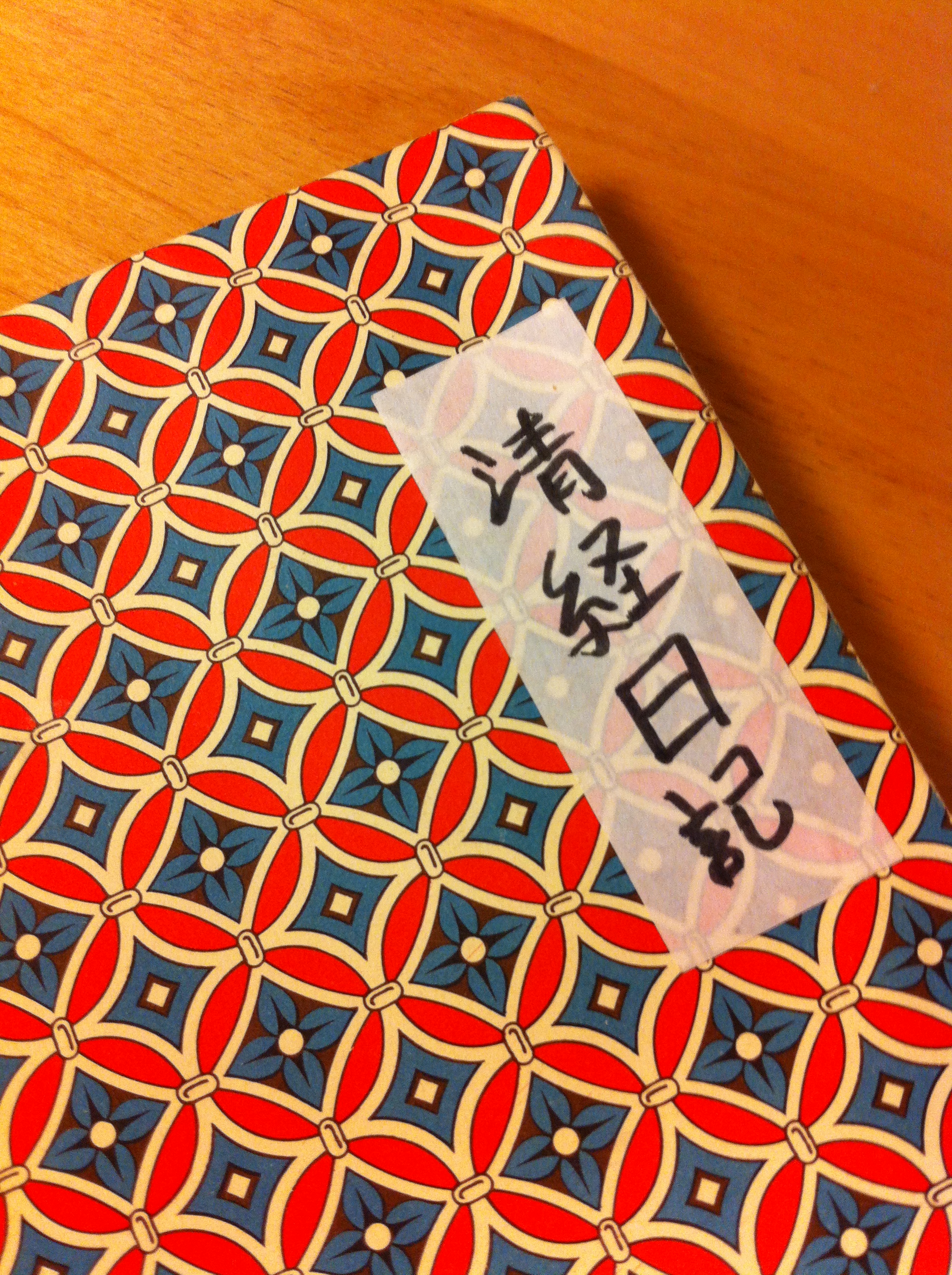
These days I am working on the maibayashi from the Noh Kiyotsune (清経). Maibayashi is one of the various canonical ways of performing excerpts of a Noh play, such as shimai (short dance with the accompaniment of a small chorus) or rengin (seated chant of a section of a play). Maibayashi (舞囃子)isa word composed by the characters for ‘dance’ (舞 mai) and ‘Noh instruments’ (囃子 hayashi). Unlike shimai, the maibayashi features the accompaniment of chorus and of the Noh orchestra, and is usually longer than an average shimai, often featuring an instrumental dance between two sections of the play. Kiyotsune is a play from the second category (Warrior plays) and tells the story of Taira no Kiyotsune (平 清経) a general of the Heike clan appearing in the Heike Monogatari epic who drowned himself at Yanagi-ga-ura (present Kitakyūshū) after realising the unavoidable defeat of his army, chased by the Genji clan. Just before committing suicide, Kiyotsune cuts his hair and gives them to his retainer Awazu no Saburo, instructing him to present it to his wife as a keepsake. The Noh opens with Saburo returning to Kyoto, where Kiyotsune’s wife awaits for the return of her husband. Once Saburo tells her about her husband, the wife is shocked and laments how Kiyotsune failed to keep the promise to reunite with her, and refuses the gift. Still in tears, she goes to sleep, where Kiyotsune visits her in dreams. In the second half of the play the ghost of Kiyotsune, in full warrior attire, appears, and discusses with the wife. This is a most interesting section, with Kiyotsune blaming the wife for having refused his gift, while the wife blames him for the selfish act of committing suicide. Blaming each other in what seems like a domestic fight, the couple realises how their condition is similar, both suffering from loss and longing, as this world and the other world are made of the same substance. Kiyotsune then recounts his last days, and, in the final dance, he mimes how he now suffers in hell, where rain is like arrows pouring from the sky, mountains are like iron castles, and enemy warriors advance inesorably like flags of clouds. As it often happens in Noh, it is thanks to the power of the narration of one’s own story (as in a psychoanalysis session) that the characters come to realise the inconsistence of their pain, and manage to get rid of the attachments that prevent them to reach enlightenment. In this case, Kiyotsune reaches enlightenment not only thanks to the nenbutsu prayer he recites before jumping into the water, but also because he comes to terms with his wife. In a way, it is not only the dissatisfaction with his own death, but also the resentment that his wife feels for him that cause his suffering.
Kiyotsune by Tsukioka Yoshitoshi
I have already performed the maibayashi from the Noh Kochō (胡蝶) a couple of years ago, which contains a standard chu-no-mai medium tempo instrumental dance. However, in Kiyotsune there is no dance between the kuse and kirisections, but a short exchange between husband and wife, before the kiri closing section where Kiyotsune recounts his torments in the hell of the ashura, the defeated warriors who remain attached to this world and cannot reach enlightenment are destined to suffer. This section is characterised by the guntai martial style, in which the kamae basic stance is performed in han-mi style, slightly lateral instead of frontal. This stance is typical of martial arts, and basically aims at avoiding to offer the front of the body to the opponent, while at the same time presenting the arm that would hold a sword or shield. As maibayashi are not in costume, this dance is performed with two fans – one is open and represents the shield, the other the sword. Handling two fans at the same time is not easy, though the greatest difficulty of the martial stile consists in performing jumps and other more acrobatic movements while maintaining the stability and solidity typical of Noh dance. As a ‘caucasian’ I also find that my legs are longer that the average east-asian: in order to take a good posture I have to bend my knees much more than the usual, which in the case of a warrior is already a lot! This puts much stress on knees and thighs, and naturally leads me to reflect on the extent to which Noh is a form of art tailored around a specific body type (male Japanese), and might not immediately fit other bodies. What is the future of the Noh bodies?

 Technique is what is left when you turn off emotions. Knowing every step of the dance, every modulation of the chant, understanding the meaning of each word and movement… none of this is really helpful on stage unless you have real control of the switch between emotion and technique. This ability cannot be acquired through intellectual understanding. Odd as it may seem, I feel it is more of a physical condition than a mental one.
 I am spending a couple of weeks in my hometown, Brescia, Italy, where I return quite often not only to visit my family and friends, but also to train with Monique Arnaud, the Noh teacher that first introduced me to Noh theatre. Arnaud is a shihan, a Noh instructor licensed by the iemoto of our stylistic school, the Kongō School of Noh. Arnaud, who is originally French, has spent most of her life abroad, first in China, then Japan, then Italy, where she currently resides, working as opera choreographer, and teaching theatre directing at IUAV University of Venice.

 The Noh Diaries