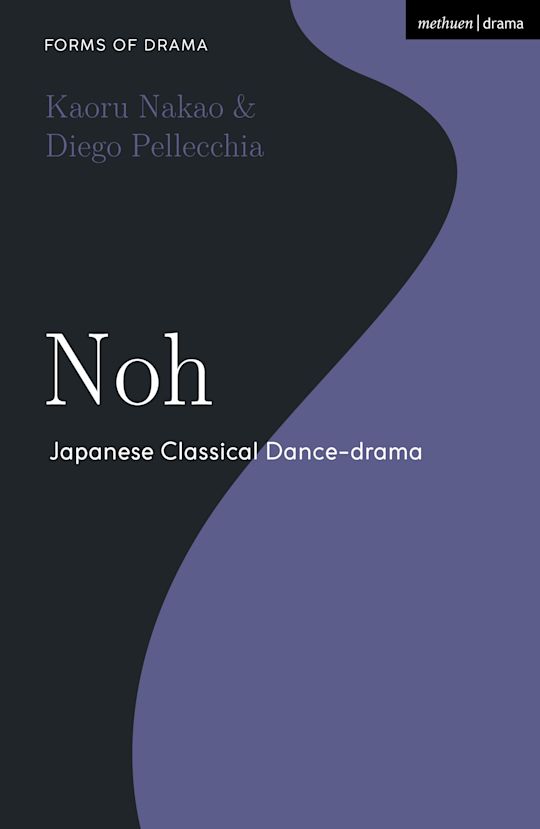
Nō is often described as austere or difficult, but at its heart it is a deeply human form of theatre. This book invites readers to step inside the nō world and discover its history, its plays, and how performances are shaped through dance, music, poetry, masks, and costumes.
Rather than treating nō as a museum piece, the book approaches it as a living practice, still performed today and still capable of speaking to contemporary audiences. It is written with students, theatre-makers, and general readers in mind, offering clear explanations without simplifying what makes nō unique.
Kaoru Nakao, Diego Pellecchia. Noh: Japanese Classical Dance-drama
Published Feb 20 2025. 208 pages 10 bw illustrations. Bloomsbury Methuen Drama
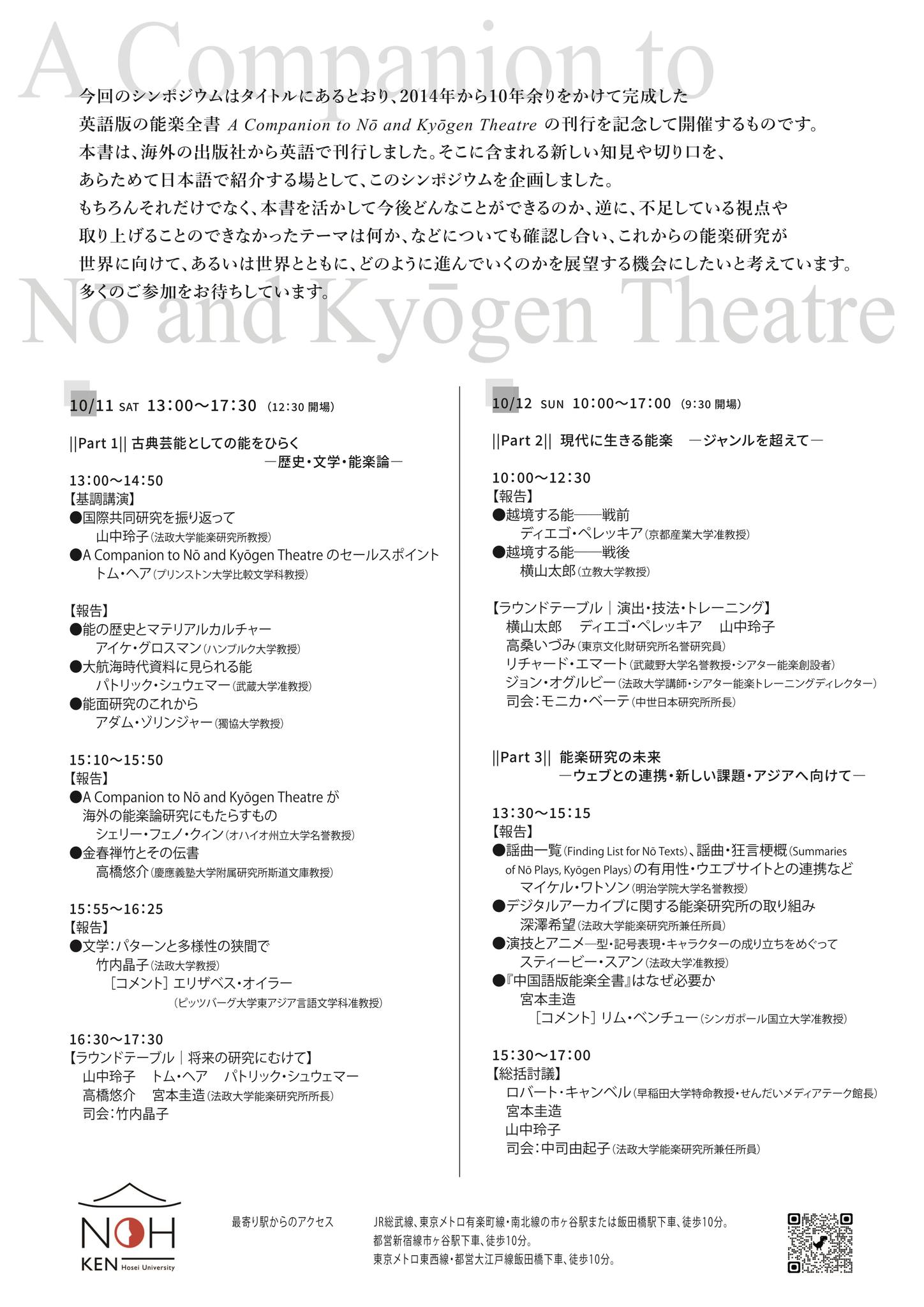
Exciting news! We will be celebrating the publication of A Companion to Nō and Kyōgen Theatre with a symposium to be held at Hōsei University on October 11-12 2025.
Nō and kyōgen theatre are among the longest continuously staged dramatic forms in the world and are deeply connected to Japanese arts, culture, society, and history. This richly illustrated two-volume set brings together the important elements of these traditions to offer new insights, with contributions by Japanese and non-Japanese experts from a broad range of disciplines. It represents the most ambitious and exhaustive exploration of nō and kyōgen to date, and is an invaluable resource for both scholars and enthusiasts.
As one of the main editors, I will contribute with a talk (online!) in the session “Nō in the Present Age,” where I will present alongside Yokoyama Tarō and will take part in the roundable on discussion that follows.
Many illustrious scholars, editors, authors, and special guests will also be participating, making this an exceptional occasion to reflect on the significance of nō and kyōgen today.
Both the book and the symposium are the fruit of the vision and leadership of Yamanaka Reiko, who has worked tirelessly to build bridges between nō and the world, and between Japanese and international scholars. This gathering is a true step forward in the internationalization of nō.
I very much hope you can join us.
お知らせです!このたび『A Companion to Nō and Kyōgen Theatre』の出版を記念して、シンポジウムが開催されます(2025年10月11日〜12日)。私は編者の一人として、オンラインで参加し、「現代に生きる能楽」のセッションにて横山太郎さんとともに発表し、ラウンドテーブル・ディスカッションにも加わります。
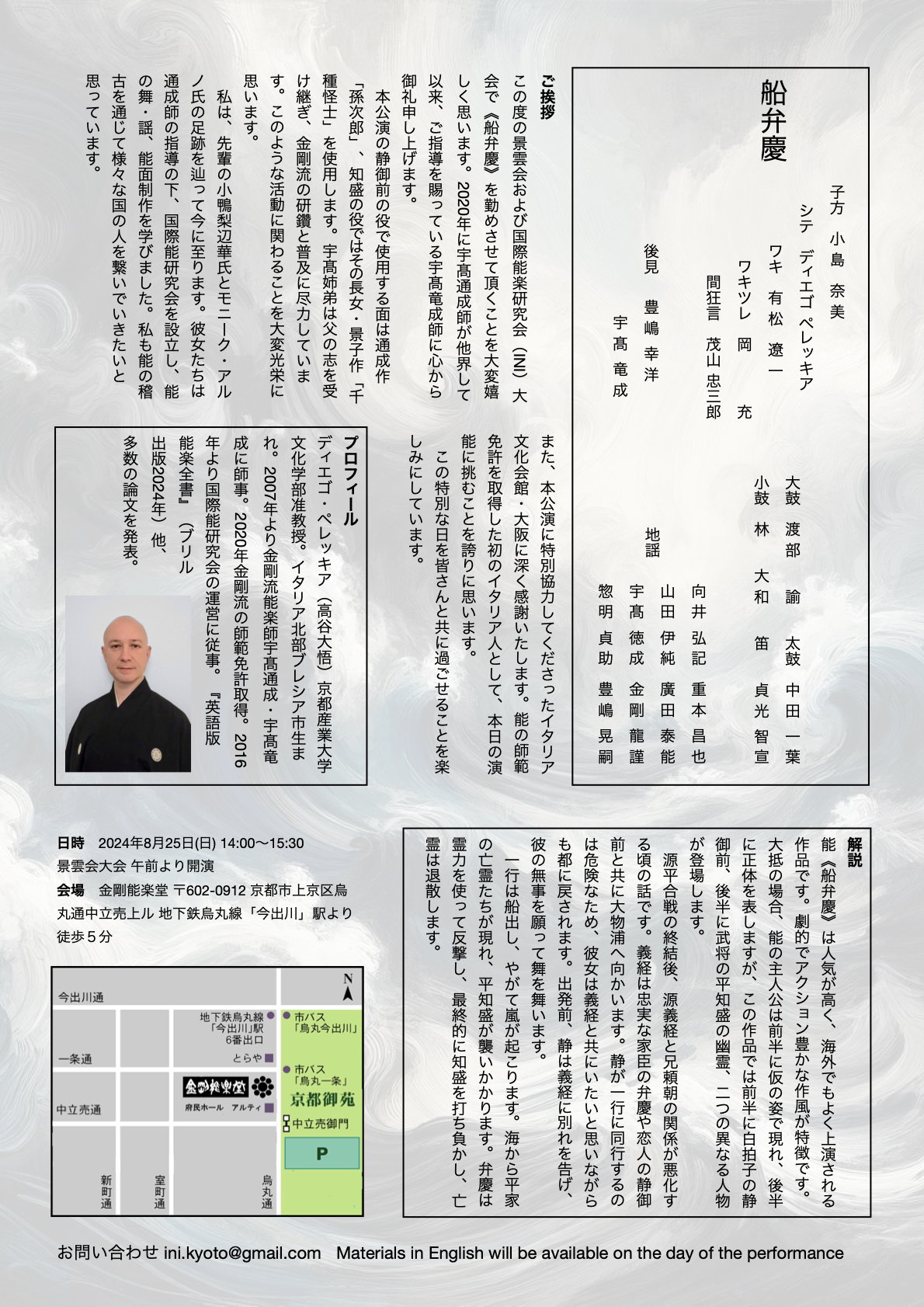
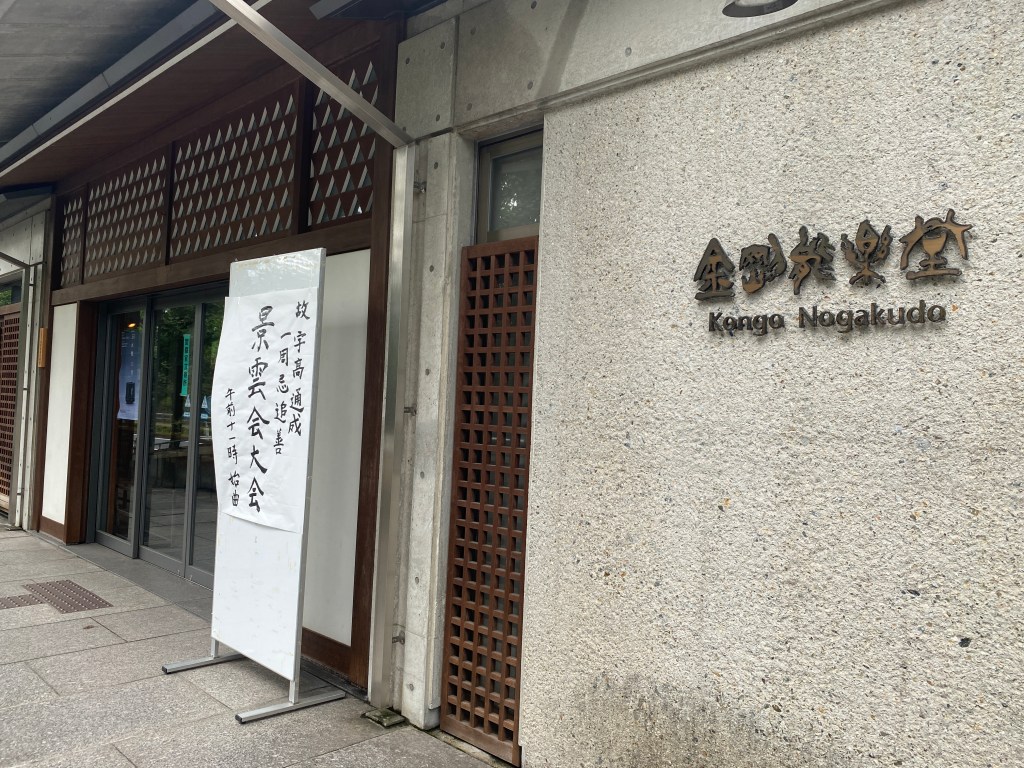
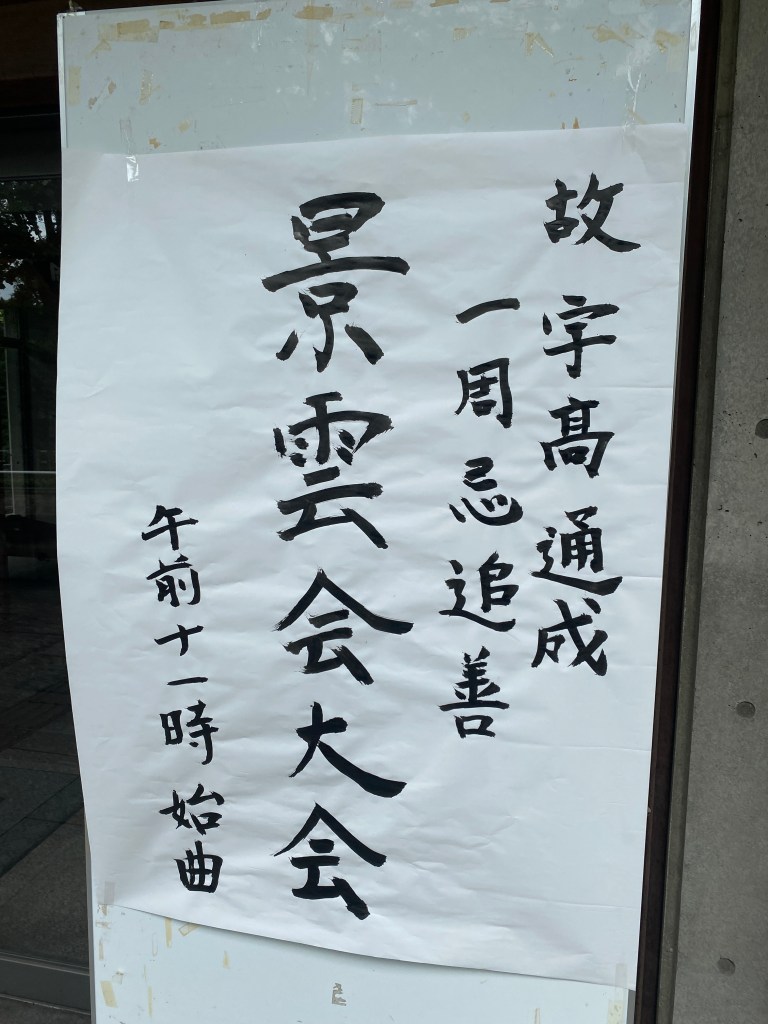
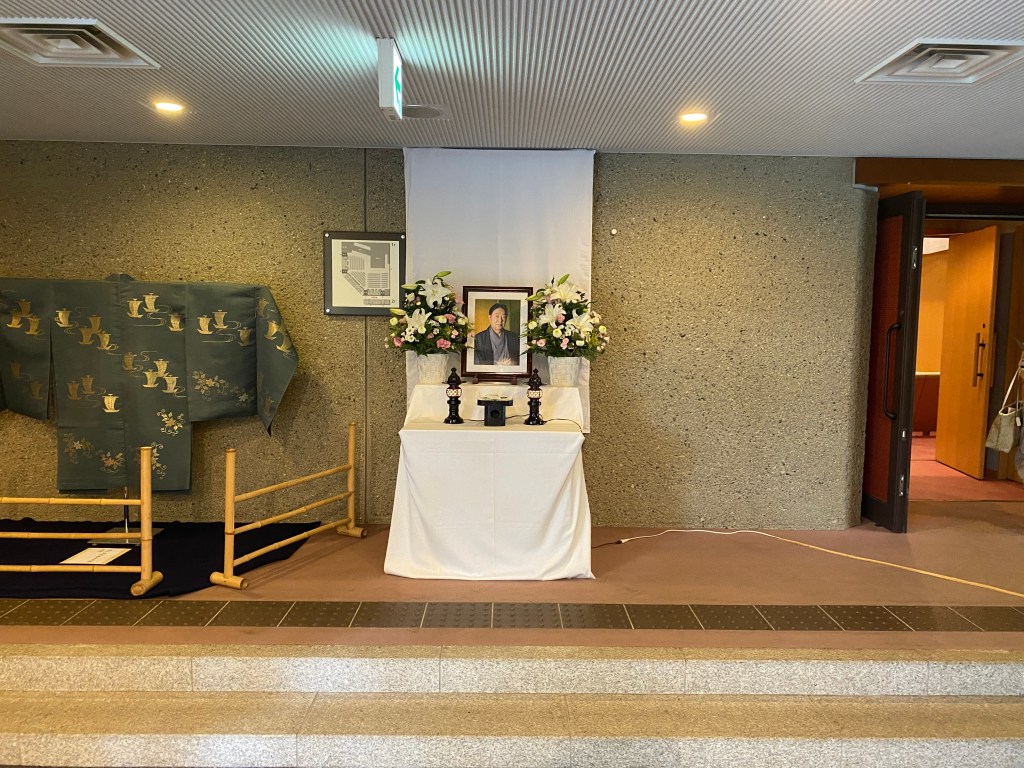
On August 25, 2024, I performed the nō Funa Benkei at the Kongō Nō Theatre in Kyoto. This was my second time performing a full nō play—the first was Kiyotsune back in 2013—and my first time since obtaining the shihan (instructor) license. I have been encouraged to share some thoughts about this experience.
First, I spent a year preparing for this performance, working step by step, block by block, following the regular practice schedule which, in my case, means two practice sessions with my teacher, Udaka Tatsushige, per month. Although numerous amateurs have short classes, I am lucky enough to train for up to two hours per session. In addition to this there is individual practice, which may take place anywhere, in the car (I chant a lot when I drive), at home, but also borrowing our practice space, or even renting a full theatre hall (as I did in Otsu, near Miidera). These individual sessions increased as the performance date approached. I started with the chant, then moved on to the dances, and finally incorporated the dialogue. This gradual process was very helpful, giving me peace of mind as the performance day approached. By the time I was ready to perform, I didn’t feel overwhelmed or stressed. Instead, I had the space to enjoy the experience.
On the day of the performance, as I watched the others prepare backstage, I felt a deep sense of gratitude for the opportunity to share this moment with them. Even though I did not speak much (the shite is not supposed to be verbal before going on stage), I could feel the energy from everyone around me, especially from my teacher and his younger brother. Seeing them, the direct heirs of my previous teacher, reminded me of the continuity of this tradition, and I felt honored to be a part of it.
A particularly powerful moment was when I stood before the mirror, about to put on the mask. The mask symbolizes so much—the character, the history, the ethos of nō itself. Knowing that the masks I used were carved by my previous teacher, Udaka Michishige, and his daughter made it even more meaningful. As I placed the mask on my face, I had to hold back tears, overwhelmed by the weight of tradition, that is, the personal connection to those who came before me.
During the performance, I had little time to think. My focus was on avoiding mistakes, maintaining my composure, and creating the right shape. For an amateur like me, this alone is a great feat. I concentrated on my breathing, ensuring I had enough breath for my lines, and I listened closely to the other performers and musicians, responding to them as best I could. I felt the power of the other performers, and sensed how they were all deeply engaged in the performance. Their energy fueled me, which made me realize just how vital this collective effort is in creating something truly special. This sense of collaboration is what makes theater such a unique art form. Nō takes this to the extreme, reducing the number of performances just to one single event.
As I stood on stage, I recognized many familiar faces in the audience, which greatly motivated me to do my best. After all, nō is performed for an audience, and knowing that their gaze was on me put me in a good place, even though I felt humbled and somewhat worried, knowing that many important guests were present. I am fortunate enough to collaborate with top scholars of nō theatre, both in Japan and internationally. Performing in front of them was daunting, to say the least. Having the waka sōke, Kongō Tatsunori(the son of the iemoto) as the chorus leader, along with many other respected professionals from the nō arts participating in the performance, made me feel like the one out of place on that stage. However, after many years of practice, I’ve learned to overcome that shyness and accept that I can show them who I am without worrying too much about perfection.
Several people told me they thought the first half (Shizuka Gozen) was particularly good, and I have to agree—I enjoyed that part very much. Both halves of the performance had their own difficulties. Dancing in kinagashi, especially for someone with long legs like mine, is not easy. The costume restricts movement to tiny steps, making it challenging to maintain balance. The second half requires skills that take a longer time to hone. Performing powerful yet clean kata, knowing when to speed up and when to slow down, demands much experience, particularly when wearing a mask and costume. The added difficulty of handling the naginata in this play was something I was concerned about. I worried that I might accidentally strike the musicians with the blade, especially during jumps. Long arms can indeed be dangerous! The mask further complicates things by limiting stereoscopic vision, making it difficult to judge depth—crucial for ensuring the safety of the other cast members. This kind of awareness and control can only be developed through experience on stage with a full cast.
What struck me this time was the contrast between the solitude of preparation and the collaborative energy of the performance. In nō, much of the training is solitary, often just you and your teacher. But when you step onto the stage, it’s a group effort, and the tension created by this transition is essential to the rendition of the play. Had we trained and worked together for months, the performance wouldn’t have had the same intensity or spontaneity.
I was also very happy to share the stage with my student, Nami, who took the role of Yoshitsune. She started from zero and made remarkable progress over the past two and a half years. Witnessing their improvement and development has been incredibly rewarding, and I am deeply grateful for that.
After the performance, I felt surprisingly energized. In contrast to my first performance, where I felt too tired to even think about doing it again, this time I wanted to go back on stage right away and correct my mistakes. There were many, but I felt a strong desire to improve and continue.
When it comes to feedback, my teacher, who is usually very verbal, logical, and analytical during practice, is rather dry after performances. Actually, I appreciate that, because I understand how difficult it is to give feedback and how much weight words can carry. Anyway, his comments were generally positive, and although I was critical of myself, pointing out the things I didn’t do right or should have done better, he tried to turn that into something positive. He emphasized that each accomplishment is just a step toward the continuous path of development. This idea is really important and provides the fuel to keep moving forward.
All in all, I am satisfied with how the performance and the event in general went, and I look forward to my next project. Thank you for reading, and for your support.
Diego Pellecchia
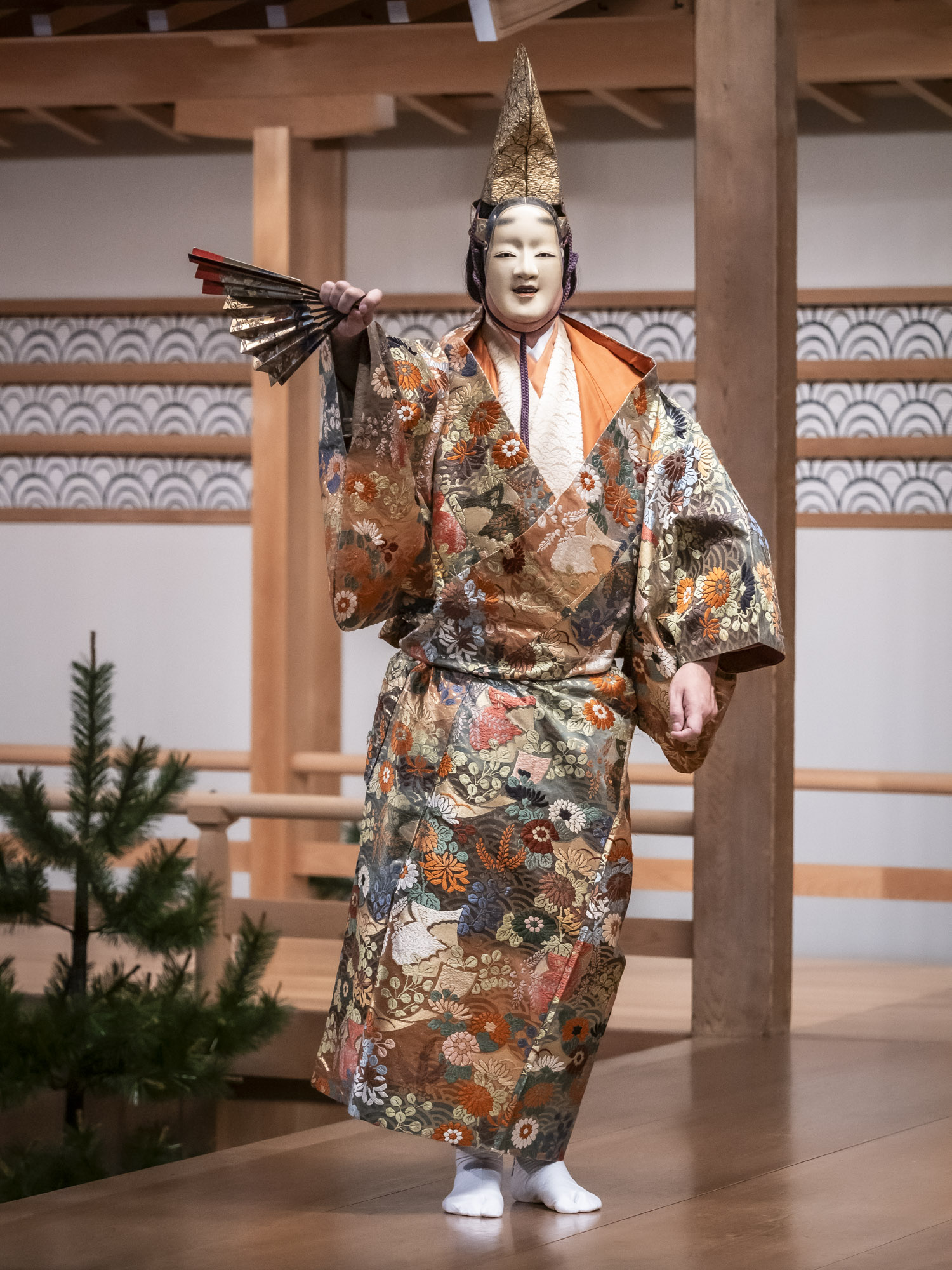
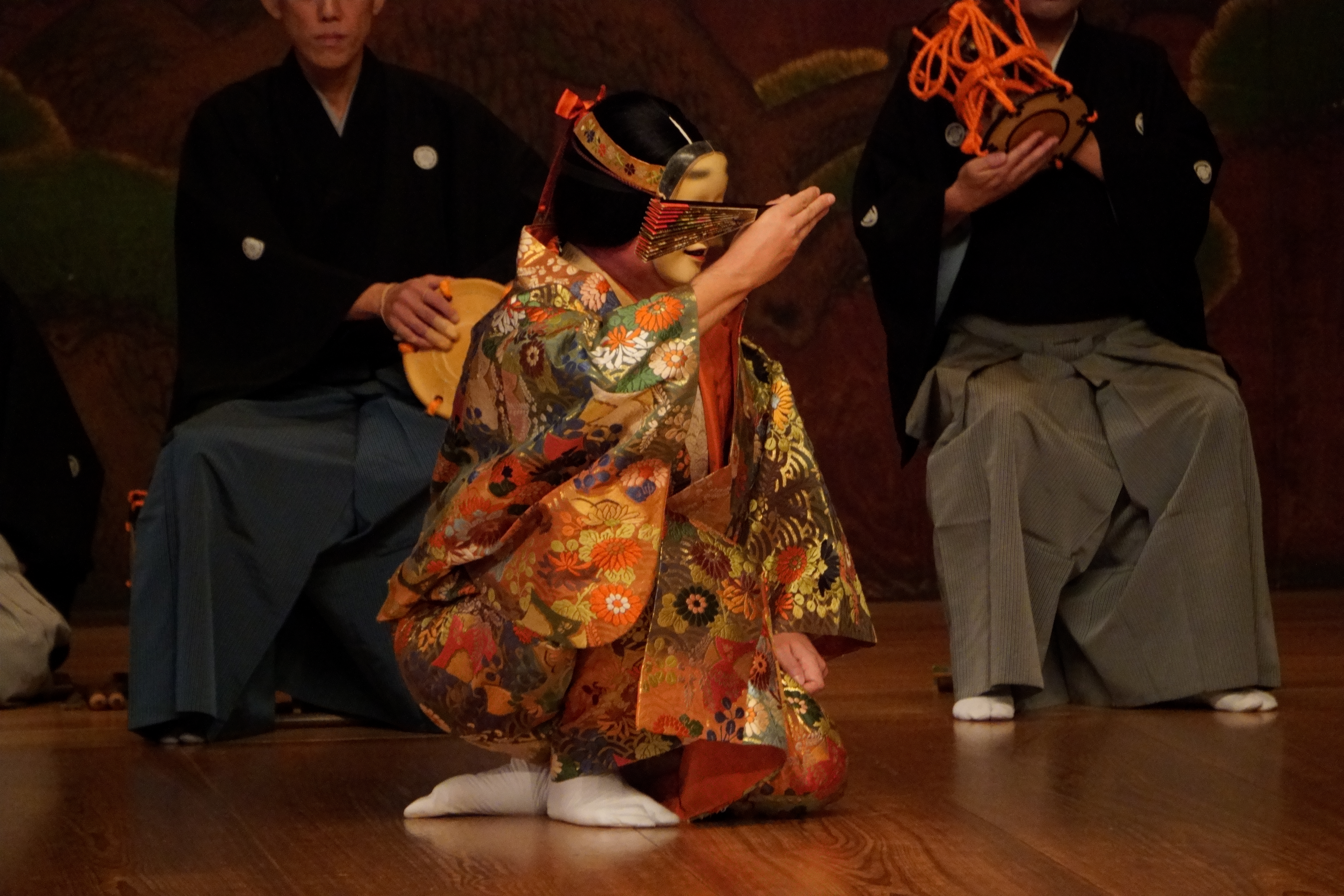
Diego Pellecchia as Shizuka Gozen (Photo: Halca Uesugi)Diego Pellecchia as Shizuka Gozen (Photo: Halca Uesugi)Diego Pellecchia as Shizuka Gozen (Photo: Halca Uesugi)Kojima Nami as Minamoto no Yoshitsune (Photo: Halca Uesugi)Diego Pellecchia as Taira no Tomomori (Photo: Halca Uesugi)Diego Pellecchia as Taira no Tomomori (Photo: Halca Uesugi)
Diego Pellecchia as Shizuka Gozen (Photo: Udaka Sanami)Diego Pellecchia as Shizuka Gozen, Arimatsu Ryōichi as Benkei (Photo: Udaka Sanami)Diego Pellecchia as Shizuka Gozen (Photo: Udaka Sanami)Diego Pellecchia as Taira no Tomomori (Photo: Udaka Sanami)Diego Pellecchia as Taira no Tomomori, Kojima Nami as Minamoto no Yoshitsune (Photo: Udaka Sanami)
I am thrilled to announce that on August 25, 2024 (Sunday), I will perform the nō play Funa Benkei as the shite (main actor). This is the second time I perform a full nō play with costume and mask; the first was Kiyotsune in 2013.
This performance will be part of the Kei’un-kai recital, organized every summer by the Udaka family. I am also grateful for the support of the Italian Culture Institute in Osaka. I will release more information about this performance soon. For now, I am focusing on training.
I hope you will come share this special day with me and the other members of the Udaka Kei’un-kai!
Here are a few photos from theexcerpt from the nō play Kantan that I performed on August 22 2021 at the Kongo Noh Theatre in Kyoto on the occasion of the 2021 Keiunkai Taikai, dedicated to the memory of Udaka Michishige.
Professional nō photographers Uesugi Haruka and Miki Eri took the photos of the performance.
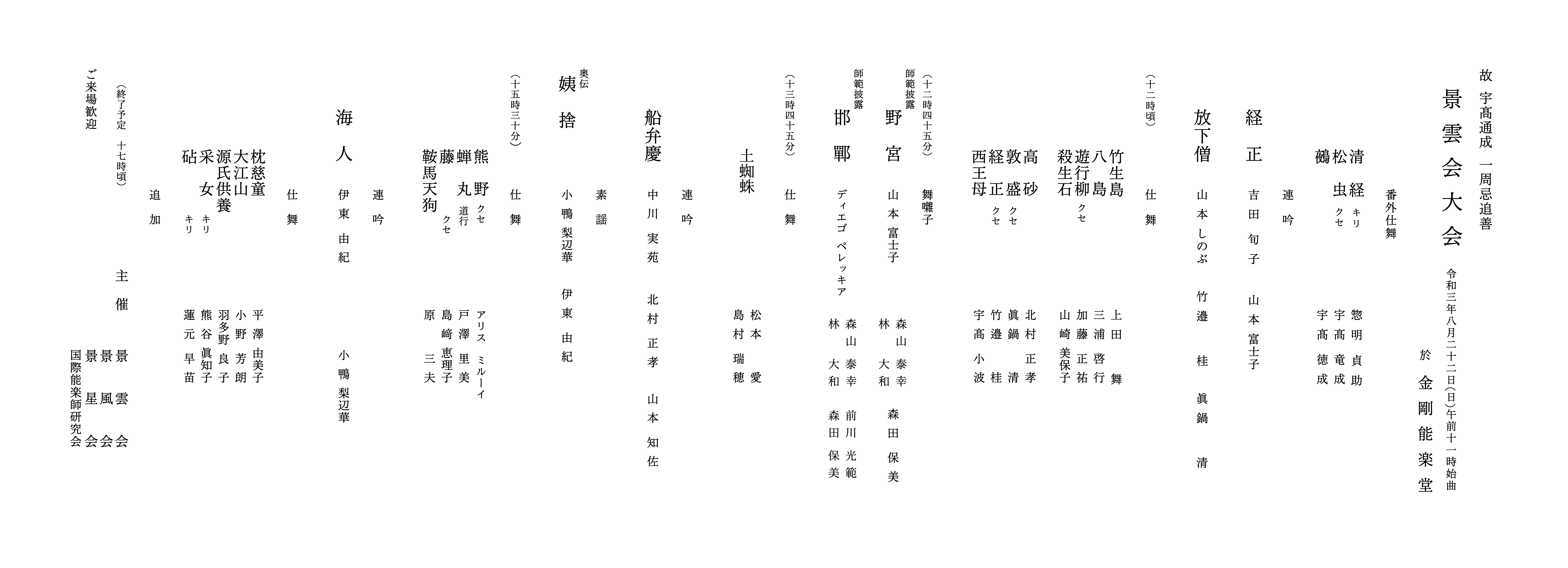
I’m happy to announce that, on August 22 (Sun) 2021 I will perform the maibayashi excerpt from the nō play “Kantan” on the occasion of the first Udaka Michishige Memorial Performance event at the Kongō Nō Theatre in Kyoto.
This will be my first performance as “shihan” (licensed instructor) of the Kongō School. Michishige-sensei took care of my shihan license application in 2020, from his hospital bed. Though the illness weakened him, he took care of his students until the very last moment. This day will be an important chance for us to express our gratitude to Michishige-sensei, whose work showed us a way we see nō not only as art, but as a way to see life. I hope you will join us on this special day! The event begins at 11:00 with various dance excerpts. I will perform at around 12:45.
Sono felice di annunciare che, Domenica 22 Agosto 2021 parteciperò alla prima performance in memoria del Maestro Udaka Michishige con un maibayashi estratto dal dramma nō “Kantan” presso il Teatro Nō Kongō, a Kyoto.
Questa sara’ la mia prima performance in qualità di “shihan” (istruttore certificato) della scuola Kongō. Il Maestro Michishige si prese cura della mia domanda di certificazione nell’inverno del 2020, dal suo letto di ospedale. Nonostante la malattia lo avesse indebolito, il Maestro si prese cura dei suoi studenti fino all’ultimo momento. Questo giorno sarà un’opportunità per esprimere nuovamente la nostra gratitudine al Maestro Michishige, il cui lavoro ci ha mostrato un modo di vedere il nō non solo come arte, ma anche come vita.
Canon and IBM Japan will join forces to promote performing arts using volumetric video technology, which I understand as being a form of 3D video filming which will allow to freely move the point of view around the stage. Captured images are digitally processed so that they can be modified adding CGI. The Iemoto of the Hōshō school, Hōshō Kazufusa, is collaborating with this project – you can see samples of his performance of Aoinoue on the Volumetric x Noh Website.
The video of Udaka Tatsushige’s full performance of the nō play Shōjō with English and Italian subtitles is now available online.
Sono molto felice di condividere con voi il video completo del nō Shōjō (猩々), con sottotitoli in inglese e in italiano! La performance e’ prodotta da Udaka Tatsushige e Norishige, ed e’ stata filmata nell’autunno del 2020 presso il teatro della Scuola Kongō, a Kyoto. Il ruolo di protagonista (shite) e’ interpretato da Udaka Tatsushige.
In occasione della pubblicazione di questo video ho avuto il piacere di tradurre il testo del nō e ho deciso di approfittarne per studiare questo brano approfonditamente. Spero di poter pubblicare presto i risultati della mia piccola ricerca in italiano. Anche un dramma breve e apparentemente semplice come Shōjō e’ in realtà molto denso di significati e ricco rimandi a leggende e tradizioni. Purtroppo il formato “video con sottotitoli” non permette di aggiungere le note, supporto indispensabile per apprezzare appieno la molteciplità di significati che ciascun verso contiene. Nella mia traduzione ho cercato di rendere il testo comprensibile anche senza un apparato critico. Aggiungo una breve introduzione e vi auguro buona visione! (Non dimenticate di attivare i sottotitoli in italiano. Se non sapete come fare, leggete qui).
La storia del nō Shōjō è ambientata nella Cina della Dinastia Tang (secoli VII-X). Un uomo di nome Kōfu vive alle pendici del monte Kanekin, nei pressi del villaggio di Yōzu. Kōfu racconta di essere molto devoto ai suoi genitori – la pietà filiale (kōkō 孝行) è una delle virtù centrali del pensiero Confuciano, fondamento etico della società giapponese. Kōfu riceve in sogno un oracolo nel quale i genitori gli suggeriscono di andare al mercato e vendere il sakè. Lui segue diligentemente il consiglio dei genitori, apre un negozio di vino, e si arricchisce. A un certo punto, un misterioso avventore prende a visitare il negozio di Kōfu. Dice di essere “Shōjō” e di venire dal mare. Incuriosito, Kōfu si reca alla baia e attende la nuova venuta di Shōjō, il quale presto emerge dall’acqua. Kōfu e Shōjō bevono insieme, elogiando le virtù del sakè, e Shōjō celebra questo incontro con una danza. Infine, Shōjō premia Kōfu donandogli una giara di vino inesauribile, prova della sua virtù e allo stesso tempo, in termini più pragmatici, assicurazione di prosperità economica per i suoi discendenti.
Fra i molti temi che varrebbe la pena commentare, vorrei soffermarmi brevemente sull’associazione fra sakè e crisantemi, ricorrente nel testo di questo nō. Secondo una tradizione di origine cinese, durante la notte i fiori di crisantemo venivano coperti da pezze di cotone per poter raccogliere la rugiada depositata su di essi il mattino seguente. Si credeva che cospargersi il corpo con questa rugiada profumata potesse allungare la vita o curare le malattie. Questo rito veniva svolto il nono giorno del nono mese del calendario lunare. Tale giorno, noto come chōyō no sekku, era una delle cinque festività stagionali. [1] Nel periodo Heian (secoli VIII-XII) l’aristocrazia giapponese usava festeggiare questo giorno con un banchetto durante il quale si beveva sakè nel quale erano stati immersi fiori di crisantemo. La festa divenne quindi associata al sakè, ma anche alla stagione della raccolta del riso, con il quale si prepara questo vino. [2] Il crisantemo e la luna, simbolo di purezza e di sincerità, sono elementi tradizionalmente associati all’autunno. Il colore rosso, che caratterizza il costume di Shōjō, allude non solo al suo possibile stato di ebrezza, ma anche ai colori del fogliame autunnale. La veste interna surihaku e la gonna-pantalone hakama sono decorate con motivi di onde in oro su fondo rosso, mentre il kimono broccato karaori è ricco di motivi floreali fra cui sono evidenti, appunto, crisantemi di vari colori.
[1] Il significato simbolico della data e’ il seguente: il numero 9, segno dispari, quindi “positivo” (yang) e indivisible e’ il numero a singola cifra più grande. La ripetizione del 9 rende il nono giorno del nono mese il giorno più “yang” dell’anno.
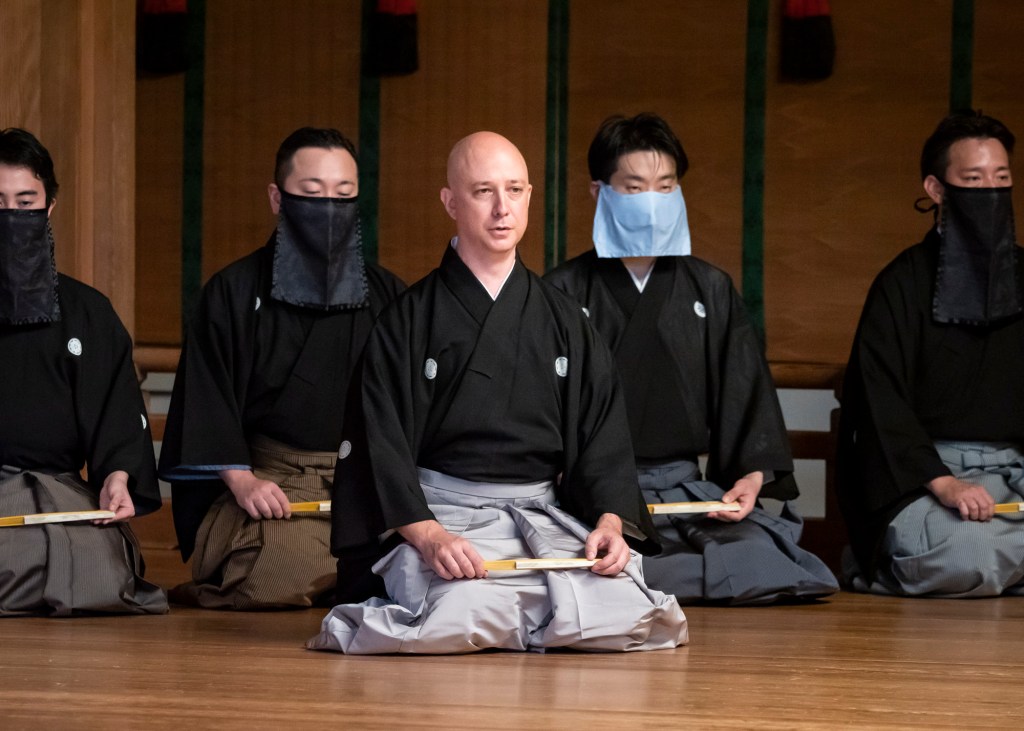
I haven’t written here for a long time. Apologies. As the “corona days” continue, noh and kyogen activities have resumed, albeit with restrictions in terms of audience capacity. Programs tend to be shorter, and in some cases plays that feature fewer performer appearing on stage at the same time are chosen. Chorus members, often reduced in number, wear cloth masks. I have also seen productions with plexiglas panels between the musicians. I think this is more a way to show that the performers “care” to reduce the chance of infection more than anything else…
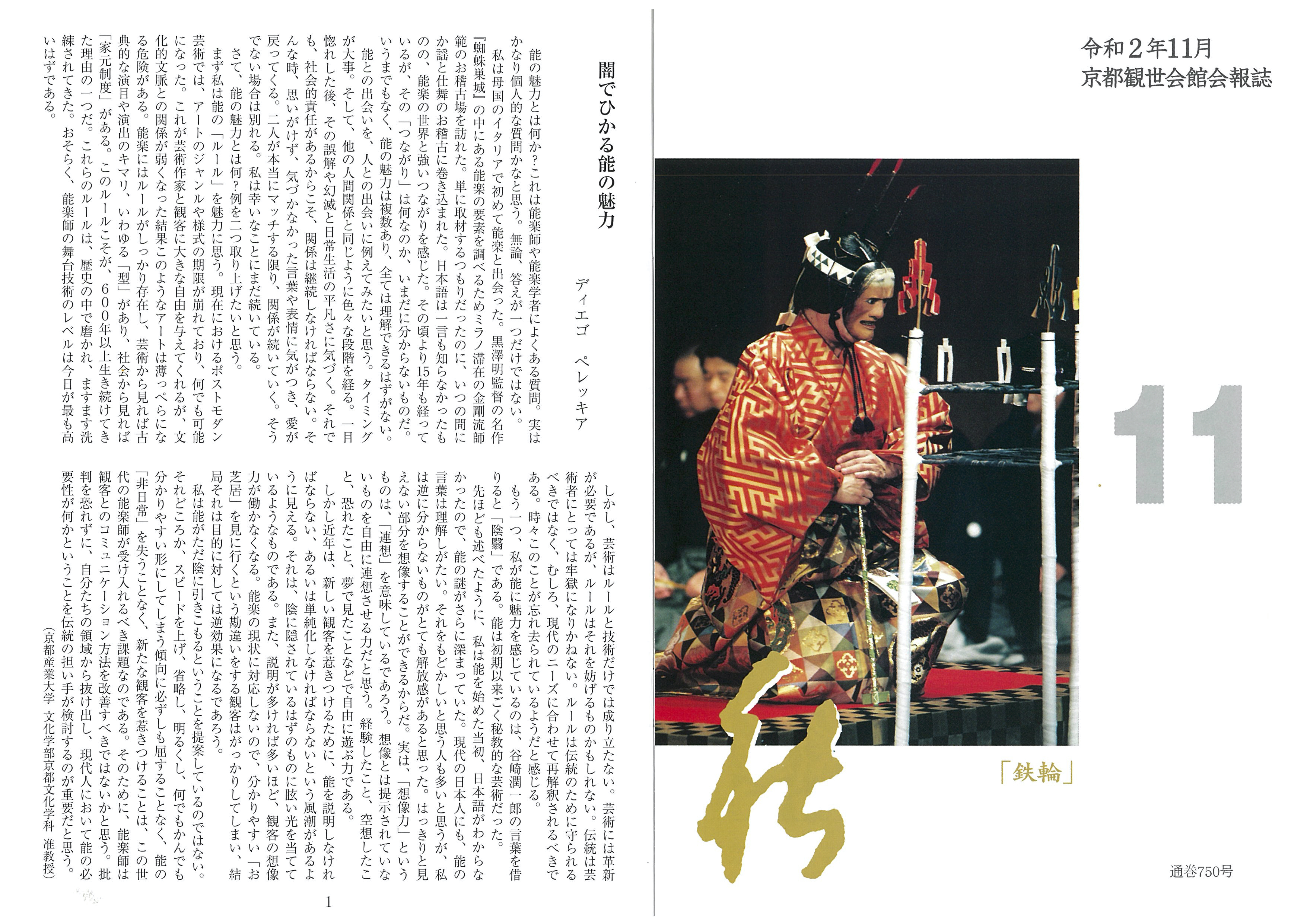
Meanwhile I was asked to write a short essay for “Noh”, a small publication produced by the Kyoto Kanze Noh Theatre.
I translate the Japanese title in “Noh theatre shining in the dark”. In the essay I talk about an age-old issue: what should be done to attract new audiences to the noh theatre. Tanizaki Junichirō praised the darkness that enveloped noh performers before the advent of natural light. Much of that darkness has been lost with the advent of artificial light. Artificial, not artistic. I am drawn to the “darkness” of noh, a word which I use as a metaphor for the the unknown, the unseen, the unprocessed. Perhaps even the non-existent. Although this is what I find fascinating about noh, most of the attempts to attract new audiences to noh theatre go the opposite way. Explanations, demonstrations, workshops – all of which, I admit, are things in which I am involved, and that I myself promote. These activities provide answers to questions. They “shed light” on something obscure that needs to be understood in order to be enjoyed. This is a misunderstanding of how art appreciation in general (not just noh) works. I find this tendency to be particularly strong in Japan, where manuals on the “correct way” to appreciate noh or other arts proliferate, and performances are typically preceded by an “explanation” by a scholar or other expert (again, something I have done and will probably keep doing). I believe that enjoying noh cannot be reduced to finding confirmation in the answers we give in workshops. Noh is not Q&A. It should be more like a conversation emerging from the encounter with the unknown. The preparation we need to watch noh is not to be found in manuals, but in an education in “creative interpretation”, something that requires a much longer period of “study” than a workshop.
In a recent interview for Tokyo Shimbun, Hōshō Kazufusa, iemoto of the Hōshō school, has commented on the current coronavirus crisis, saying that (I paraphrase) many people think that the tension perceived in a nō performance cannot be transmitted through videos, but there are things such as the breathing of the performers or the sweat dripping from their chins that film techniques can capture in order to convey the “drama” of nō performance.
I very much agree with this. The problem with YouTube videos of nō is that many of them are produced without the necessary attention to how the performances are filmed. Of course, there are reasons for this, including organization, timing, and, most importantly, budget. But there could also be a lack of awareness of the shortcomings and potentials of the video medium.
I think that there could be a future for nō videos if the quality improves. Filmed performances of kabuki, but also of the National Theatre or The Globe may serve as inspiration. The current crisis will eventually (hopefully) end, but the Internet is going to stay. I hope nō will be able to make good use of it.





 Performance announcement





 The Noh Diaries