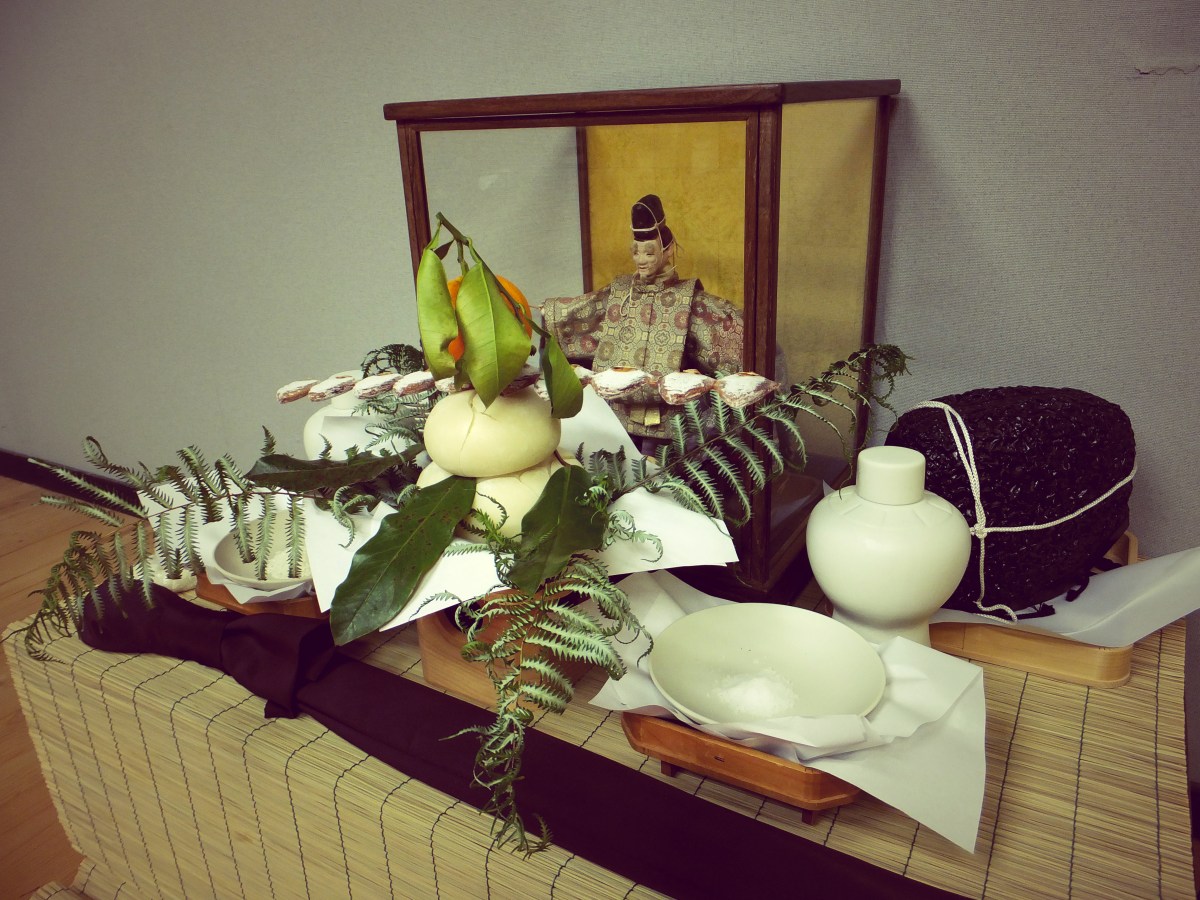
Ritual purification of the stage

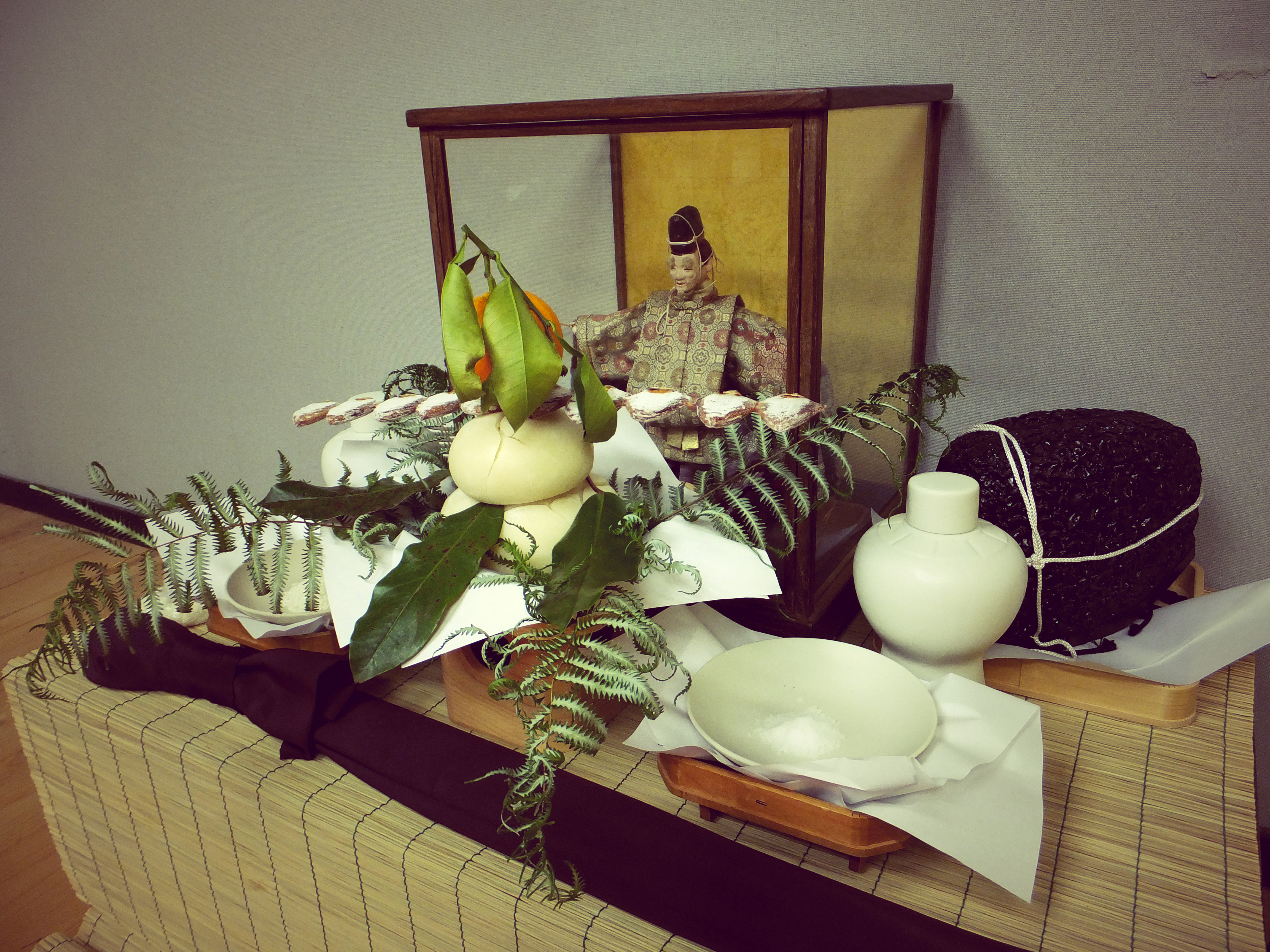
Every year at this time of the year Udaka-sensei performs a brief ritual of purification of the butai, the stage on which he and his students practice during the rest of the year, at the okeikoba practice space. As you can see in the pictures, a small altar with an Okina doll and various offerings (rice cakes, mandarins, uncooked rice, salt and rice wine, etc.) is set up at the back of the stage. During the ceremony omikia ceremonial sacred cup of wine, is  also served. This ceremony derives from shinto practices associated with the New Year, where various places or objects are blessed or purified, getting ‘refreshed’ for the new year.

DSCF1034_Fotor

From a secular perspective, I found this ritual very meaningful. The practice space is not a place like any other. Theatre practitioners such as Stanislavski and E.G. Craig wrote it in red letters in their notes. The stage is like a workplace, one that is shared with others. It is a space for meeting and transmission of knowledge. The stage demands respect. Much of what happens on stage would not be convincing without the necessary amount of concentration and tension. We treat the stage like an ‘other’ place, for example we don’t walk on it without wearing white tabi socks, or we don’t sit on its edge – all this informs our conscious and unconscious awareness that the stage is not like any other place, and this results in an heightened state of tension when performing on it. The theatre stage is charged by the gaze of all those who look at you when you perform on it, but the private practice space needs extra attention in order to perceive at least some of the emotions you feel when you go on stage. That is why we need to respect our practice space, whatever it is, wherever we are.

A true priest is aware of the presence of the altar during every moment that he is conducting a service. It is exactly the same way that a true artist should react to the stage all the time he is in the theater. An actor who is incapable of this feeling will never be a true artist.
Constantin Stanislavski
 
DSCF1035_Fotor

Noh mask carving atelier – special opening

Udaka Michishige’s Noh mask atelier will open to guest observers on January 9th, 16th and 23rd from 14:00 to 17:00 or from 18:00 to 21:00. This is a great opportunity for those interested in masks and in the mask-making process, as well as in the use of the masks in actual performance: Michishige is the only Noh actor who is also a skilled mask carver, regularly using his own masks on stage. In 2010, Michishige published the photobook The secrets of Noh Masks (Kodansha/Oxford) with photographer Shuichi Yamagata. I have posted more about Michishige’s activities as mask carver here.

If you are in Kyoto don’t miss this chance to be introduced to the world of Noh masks – both Japanese and English speakers are welcome! Observers are admitted FREE OF CHARGE

To reserve a place, or for more information, please feel free to contact me here.

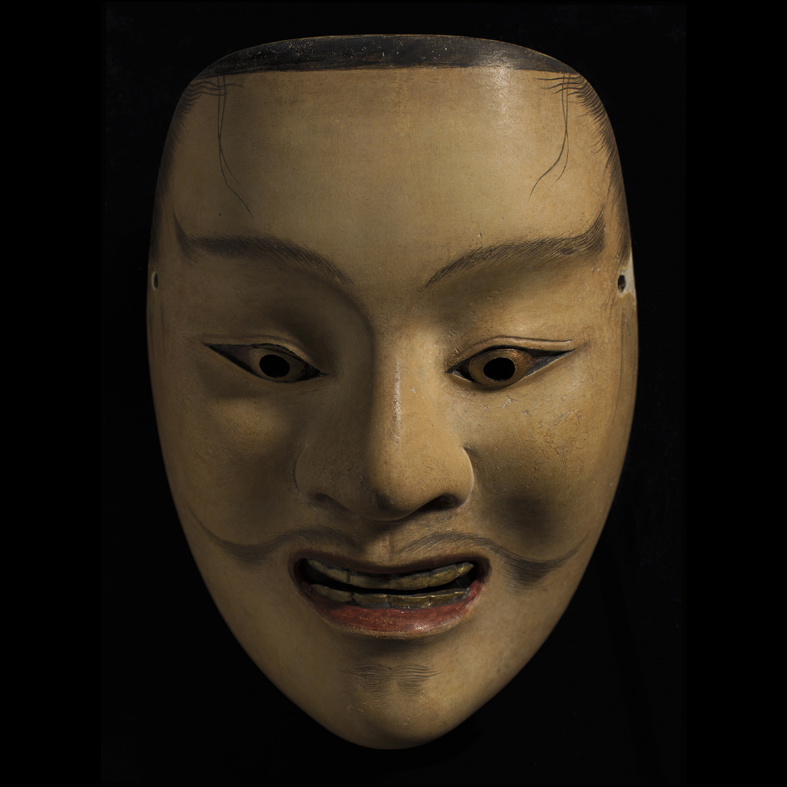
Shintai, for roles of young gods, by Udaka Michishige (Photo: Fabio Massimo Fioravanti)

Seasonal cleaning – utaibon

Today was the first of two days of ōsōji, the seasonal cleaning taking place in Japan before the New Year, at Udaka-sensei’s okeikoba training space. This kind of cleaning is performed everywhere in Japan (homes, shops, workplaces, etc.) and is part of the rituals that welcome the Japanese ‘early spring’ (shoshun 初春), that corresponded with the month of January in the traditional calendar – so it is a kind of ‘spring cleaning’, except that you open all doors and windows to clean, and that it’s usually terribly cold. In fact it’s even snowing today.

Osoji utaibon

Anyway, today myself and other members of Udaka-sensei’s group met at the okeikoba to start cleaning up. The first thing we needed to do is reorder a section of the utaibon Noh libretti, that you see in the picture here. As you notice they all feature the same kamon family seal of the Kongō family printed in gold on the cover. Each of the five shite main actor schools produces their own utaibon, which are sold both to professionals and to amateurs. The content of the utaibon differs from school to school, but it normally consists of the text of the play with minimal instructions on how to sing. While some schools also include information on performance and small drawings, the Kongō utaibon only contain basic information about the characters, a resume of the play with some background information, and notes about important poetic passages in the book (whether they are quotes of classic texts, sutras, etc.). I should probably post more about utaibon in a dedicated post, as there is so much to say about them. The ones you see in the picture are shinpon or ‘new books’, while kyūhon or ‘old books’ have a white cover, and are way more difficult to read. Ok will write more about it later.

Shimotsuma Shoshin as videogame character

I have posted on the presence of Noh in videogames elsewhere, but I recently found this and I felt compelled to share. Apparently one of the characters in the popular videogame Sengoku Taisen is Shimotsuma Shōshin 下間少進 (1551-1616), here under original (I think) name, Nakataka. Shimotsuma Shōshin was a high ranking monk at the Honganji temple in Kyoto, as well as skilled Noh performer of the Konparu style – he performed up to 70 plays in his career! As politician, he was first affiliated with the Oda family and, later, with Toyotomi Hidetsugu, of whom he was Noh instructor. Shōshin is an important figure in the history of Noh, especially because of his record of Noh, Nō no tomechō 能之留め帳, but I thought he would be too specific to see him in a videogame. I was wrong!

As for his ‘portrait’ below… what an interesting mix of fanciful Noh costumes, oversized buddhist beads, and visual-kei haircut!

20131216-152725.jpg

Kasuga Wakamiya Onmatsuri – Otabi Shosai

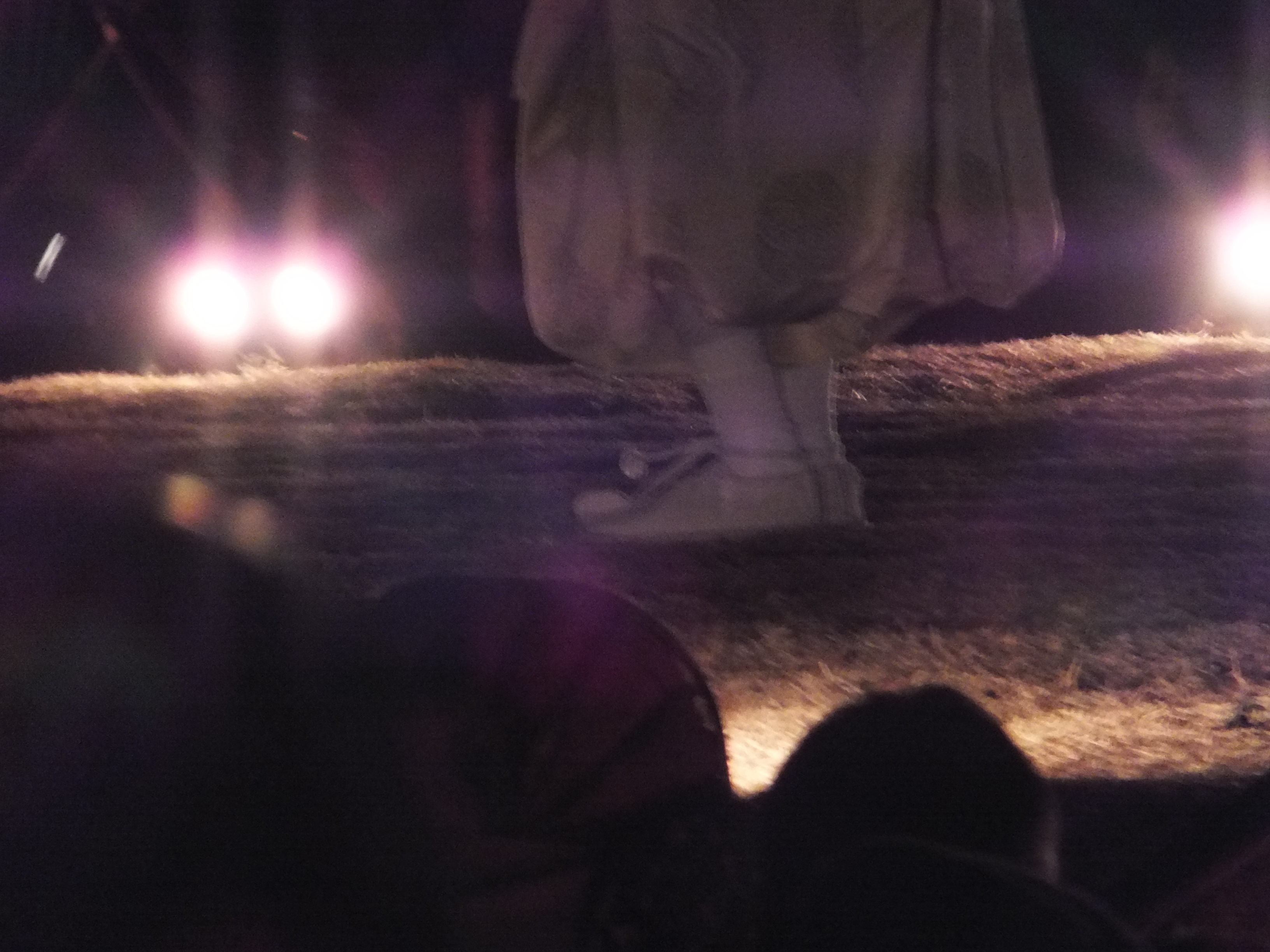
Yesterday I went to the Onmatsuri festival at the Kasuga Wakamiya Shrine in Nara. I was invited to attend a special sequence of performances called Tabi shosai, staged in front of a  shrine where the god is temporarily residing. An academic treatment of the festival can be found here. I wish I had more time to talk about the performances here, but I don’t. Yesterday it was cold and dark (after 16:30) so I could not take good pictures. However, I wanted to share here a the only few snapshots of a performance that was listed as sarugaku in the programme. It was in fact kagura-shiki, a stripped-down version of Okina usually performed without mask and with plain white costumes instead of the usual okina-kariginu embroidered cloak. This kind of performance is often staged around this time of the year by high-ranking Noh actors. Other analogous acts, part of a ritual sequence called ‘under the pine tree’ such as yumiya tachiai, were performed in the morning. All performances take place on a ‘lawn stage’, the front facing the shrine, so performance need to wear special shoes instead of the usual white tabi socks. These performances remind us of the ritual origin of Noh, though the contemporary staging of such rituals has naturally changed with time. Here are a few pictures:

Matsu no shita, ‘under the pine tree’ – Yumiya tachiai, in an old postcard, showing exactly the same ritual that is performed today
DSCF1022
Kagura-shiki: the ji-utai chorus seen from the back. On the left, the temporary shrine where the god resides.
DSCF1017
Okina
DSCF1013
Special shoes worn over tabi

[New book] To Hallow Genji: a tribute to Noh

Prof. Royall Tyler told me about the imminent publication of his new collection of Noh translations just a couple of weeks ago. To Hallow Genji: a tribute to Noh is an interesting Amazon ‘print-on-demand’ independent publication format (does Royall Tyler need an editor at all?) including many rare and bangai plays that fell off the current repertoire of the five Noh schools. Prof. Tyler does not really need any introduction, but for those who are approaching Noh for the first time, I would like to remind that he has published his first Noh translations in the 1970s: his Japanese No Dramas (Penguin, 1993) is an important contribution to the dissemination of Noh in the world – I think it was the first Noh book I’ve ever bought, actually. He is the author of various major essays and translations of Japanese classical literature, including his recent English translation of the Tale of the Heike (Penguin 2012).

From the book’s blurb:

“This tribute to the Noh theater includes eighteen plays and four essays. Among the plays are five non-repertoire that survive in Zeami’s own hand. The eighteen are Genji kuyo, Akoya no matsu, Funabashi, Furu, Genjo, Hakozaki, Higaki, Kuzu, Matsura Sayohime, Naniwa, Nishikigi, Nomori, Saoyama, Tadatsu no Saemon, Togan Boto, Toru, Tsunemasa, and Unoha. The essays are entitled “The Sword of Furu,” “Matsukaze and the Music of the Biwa,” “The Jewel of Shidoji,” and “A Note on the Theme of Wholeness and Rupture.”

I am looking forward to lay my hands on this book. Amazon’s print-on-demand seems like an interesting alternative to the e-book format, which still needs improvement, especially when it comes to books that require columns and other special pagination and formatting.

Rare play: Genzai shichimen

Yesterday I attended the last of the Kongō monthly series of the year. As usual two Noh plays were performed, but I was particularly interested in seeing the Iemoto Kongō Hisanori perform Genzai shichimen, a play that has been staged yesterday for the first time in 60 years. The play is currently in the repertorie of the Kanze and Kongō schools only, and its special feature is a costume change and mask ‘change’ on stage (not seven masks, just one – in case you are wondering…) in second half. In this play two masks are donned one on top of the other.

Rebecca Teele Ogamo regularly writes extensive programme notes with detailed costume and mask information every month – thanks to Rebecca’s notes of Genzai shichimen I was able to appreciate the play even more. I did go through the utai of the play with Udaka Michishige-sensei, who was jigashira chorus leader, a couple of times, but the kyūhon ‘old’ cursive utai-bon script made it difficult to follow the story, so I am grateful to Rebecca for that!

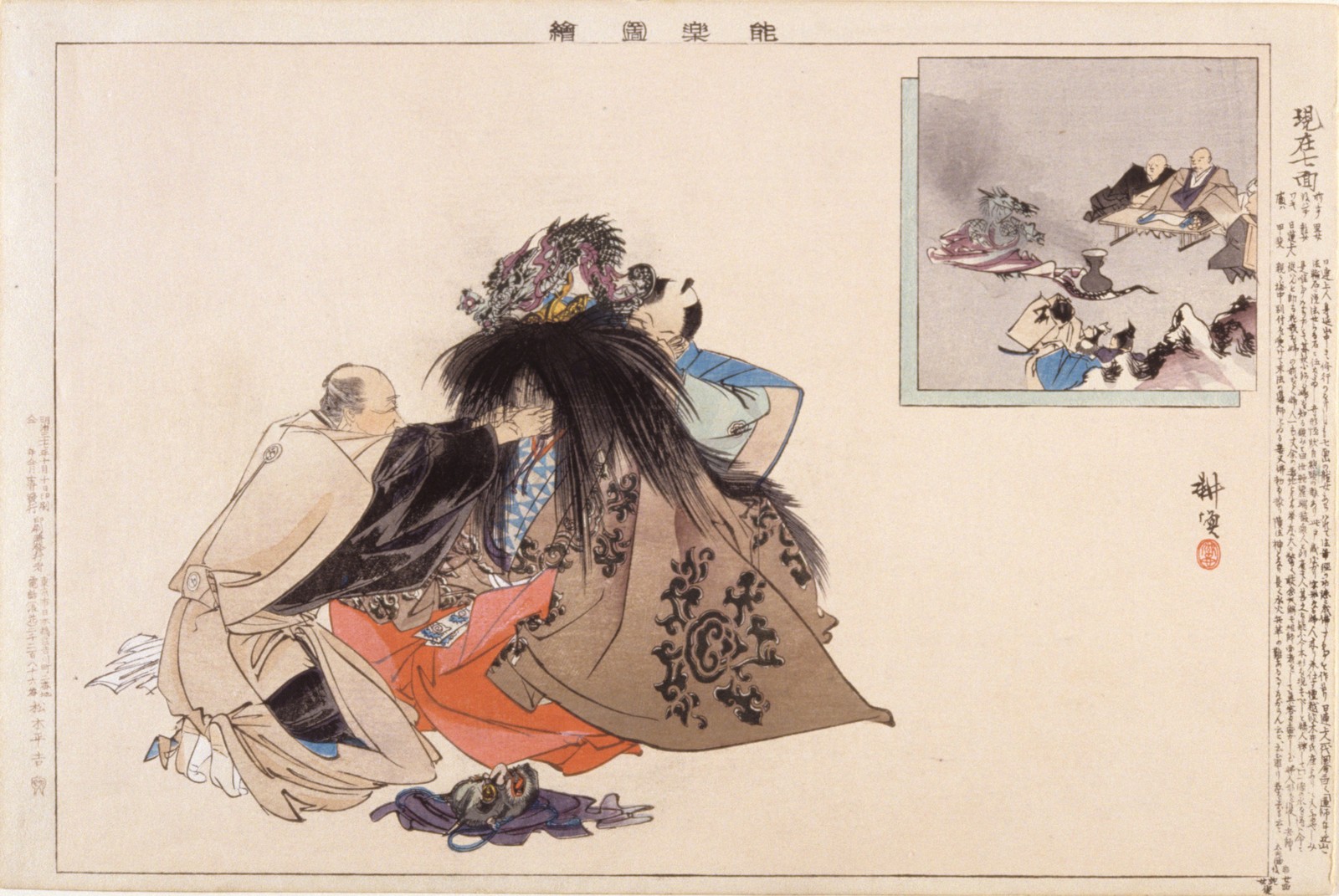
The costume change in Genzai Shichimen - print by Tsukioka Kogyo
The costume change in Genzai Shichimen – print by Tsukioka Kogyo

In the play the waki, Nichiren Shōnin (1222-82), founder of the Nichiren sect of Buddhism, is preaching at Mt. Minobu (Yamanashi prefecture). A local woman rejoices in hearing the Lotus Sutra preached, and. upon Nichiren’s questioning, she replies that she suffers the Three Burning Torments. Eventually, she reveals her true nature: she is the Dragon who lives in the Shichimen Pond. At this point thunders and lightings fill the sky and the woman disappears. In the second half of the play, a Dragon enters, with a particular costume and mask set up. Though Kanze uses a Hannya mask, the Iemoto chose a terrifying dai-ja (great serpent) mask, of the kind used for the Noh Dōjōji. This mask in the Kongō collection is rather scary due to its asymmetry and grotesque, contorted fanged mouth. However, after Nichiren has recited lines from the Lotus Sutra, the Dragon goes retreats to the back of the stage, where assistants help to change costume and mask. Besides Dai-e, where the shite wears the shaka Buddha mask on top of a beshimi tengu mask, Genzai shichimen is the only other play I know were two masks are worn one on top of the other. I can only imagine how difficult it is to move on stage with such set-up. The Dragon transforms into a heavenly maiden (zo-onna was the mask used yesterday) who then dances a kagura Shinto Dance in thanks for having reached enlightenment, and finally flies away in the clouds.

Nichiren was a militant preacher, advocating the primacy of the Lotus Sutra above all other Buddhist doctrines. His aggressive attitude towards the other Sects, which he deemed responsible for the corruption of the country during his time, was extreme. He founded the first Buddhist doctrine originating in Japan, and could be seen as an precursor of Japanese religious nationalism (though this is usually associated with Shinto). The combination of Buddhist and Shinto elements can be found in other plays, but it is even more justified in this play since Nichiren (as others before him) comprised Shinto elements, such as the Sun-Goddess Amaterasu, within the all-encompassing cosmos of the Lotus Sutra.

The author of the play is unknown, but I wonder whether the various special features – a dragon god/heavenly maiden, an important waki character, special effects such as costume and mask change) – don’t indicate that the play was probably written in the late Muromachi Period. Yamanaka Reiko and Lim Beng Choo have written about plays composed during this period here and here.

[EVENT]: Internationalisation of Japanese Traditional Performing Arts

Rits event omote

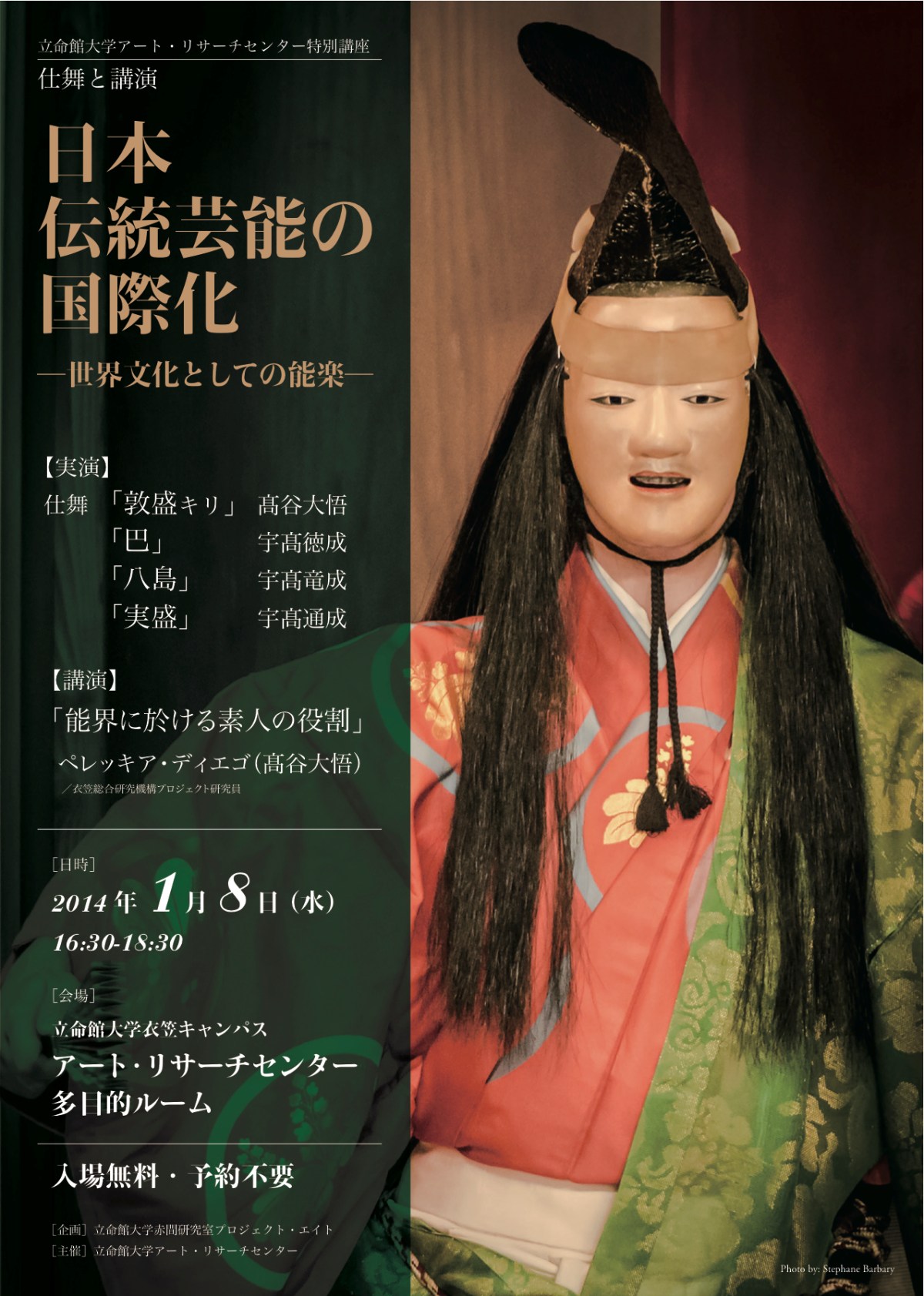
On January 8th 2014 the ARC Art Research Centre at Ritsumeikan University will host the event ‘Internationalisation of Japanese Performing Arts – Noh as Culture of the World’. The event combines performance, theory and discussion. See below for details (in English and Japanese).

The first part features shimai dance excerpts by masters of the Kongo School of Noh Udaka Michishige (Sanemori), Udaka Tatsushige (Yashima) and Udaka Norishige (Tomoe). I will also perform a shimai under my stage name Takaya Daigo (Atsumori – kiri). In the second part of the event I will showcase my current research: ‘The role of amateurs in the world of Noh’, as a work-in-progress. In this lecture I will explore the various kinds of amateur practitioners that populate the cultural world of Noh and how their social, economic and political role has changed throughout history. Unlike other kinds art professionals, most Noh performers depend on teaching amateurs in order to socially and financially sustain their artistic activities. Noh is currently undergoing a difficult phase in its history, with dwindling audiences and a lack of young blood among its professional ranks. In order to look for trajectories of solution to these issues, I believe that is necessary to consider the role of amateurs as one of the pillars on which the Noh world is based, and understand the complex relationship between audience, amateurs, and professionals. In the third part of the afternoon I will invite Udaka Michishige to discuss the role of amateurs in his experience as Noh actor and leader of the Kei’un-kai and of the INI International Noh Institute.

Internationalisation of Japanese Performing Arts

– Noh as Culture of the World –

January, 8th 2014 (Wednesday)

Ritsumeikan University, Kinugasa Campus

Art Research Center

Programme:

16:00 Opening remarks

16:40 Performance (shimai)

Atsumori – kiri Takaya Daigo

Tomoe                 Udaka Norishige

Yashima             Udaka Tatsushige

Sanemori           Udaka Michishige

17:00 Intermission

17:10 Lecture – The role of amateurs in the world of Noh -Diego Pellecchia (Visiting Researcher, Art Research Centre, Ritsumeikan University).

17:45 Udaka Michishige and Diego Pellecchia in conversation

18:30 Closing remarks

The event is open and free of charge

Rits event ura

10 years of Shin-Kongo Nogakudo

On Sunday 24th of November a special celebratory event marked the 10th anniversary of the construction of the new Kongō Nō theatre, in Kyoto. The old theatre in Muromachi-street was a landmark in the history of Kyoto Noh, as it was the only stage rebuilt after all three main stages in Kyoto were burnt during the the Meiji upheavals. In 2004 the new state-of-the-art Kongō theatre opened on Karasuma street, in front of the imperial palace. I never had the pleasure of visiting the old theatre, but I heard many stories about it from  actors in the school. It still had tatami mats instead of chairs, and large windows that let warm daylight illuminate the stage, across clouds of tobacco smoke lifting from the back seats. There, important guests would be able to sit in privacy, hidden behind lowered bamboo curtains, which they would lift only to watch the performance. Unfortunately the building did not conform to the modern health & safety (and fire protection) standards, and had to be demolished.

The Shin-Kongo Nogakudo

The Shin-Kongō Nōgakudō (New Kongō Nōgakudō) is one of the best Noh theatres I have ever visited. The design style of the building mixes traditional and modern, wood and concrete, in a unique blend that creates an atmosphere that is not too relaxed, nor too intimidating. It has comfortable armchairs (but not too dangerously comfortable), and the temperature usually is just right, unlike other places where you either freeze or steam.

Sunday’s performance opened with a special variation of Okina a ritual performance celebrating long and prosperous life. In this variation, called jūnitsukiōrai, the Iemoto Kongō Hisanori and his son Kongō Tatsunori took the roles of two Okina exchanging verses describing the characteristics of each lunar month. The choice of the variation was excellent because it emphasises the cycle of time and seasons with both the Kongō father and son on stage, symbolising the generational transmission of the Kongō heritage. It closed with a final left-right salutation from Kongō Tatsunori, who will be the future Iemoto.

The Kongo Noh butai

The maibayashi extracted from the Noh Ema featured three of the senior Noh actors in the Kongō school, Teshima Michiharu, Imai Kiyotaka and my teacher, Udaka Michishige, who took the strong role of the god Tajikarao, pulling the Sun-Goddess Amaterasu out of the cave where she was hiding.

Hagoromo (shōgi no monogi variation) featured the beautiful ‘phoenix robe’, a costume only worn by the Kongō Iemoto. In this variation the tennyō (celestial maid) dons the costume while sitting on a stool in the middle of the stage.

Shakkyō (The Stone Bridge) concluded the long day of performances, with Kongō Tatsunori taking the role of the lion (an avatar of the Bodhisattva Manjusri) frolicking among white and red peonies.

20131126-100206.jpg

Tenkawa densetsu satsujin jiken – re-upload

I blogged about Ichikawa Kon’s 1991 thriller set in the world of Noh 天河伝説殺人事件 (Tenkawa Densetsu Satsujin Jiken) ages ago. The YouTube trailer I linked was taken down, but I now realise that it has been re-upped elsewhere, so I re-link it here.

This is an update after having seen the film – you should watch it if you are a Noh nerd. As far as I know it is only available in Japanese and the version I own has no English subtitles. Tenkawa-jinja in Nara prefecture is a real place, and still preserves the jo old man mask that Motomasa, Zeami’s son, offered to the sanctuary before his death, still shrouded in mystery. The events around Motomasa’s death have been recently dramatised in Umehara Takeshi’s Super Noh: Zeami, of which I wrote a criticism so spicy that I need to re-read before publishing. This is something I wrote about it before attending the performance in Osaka last summer.