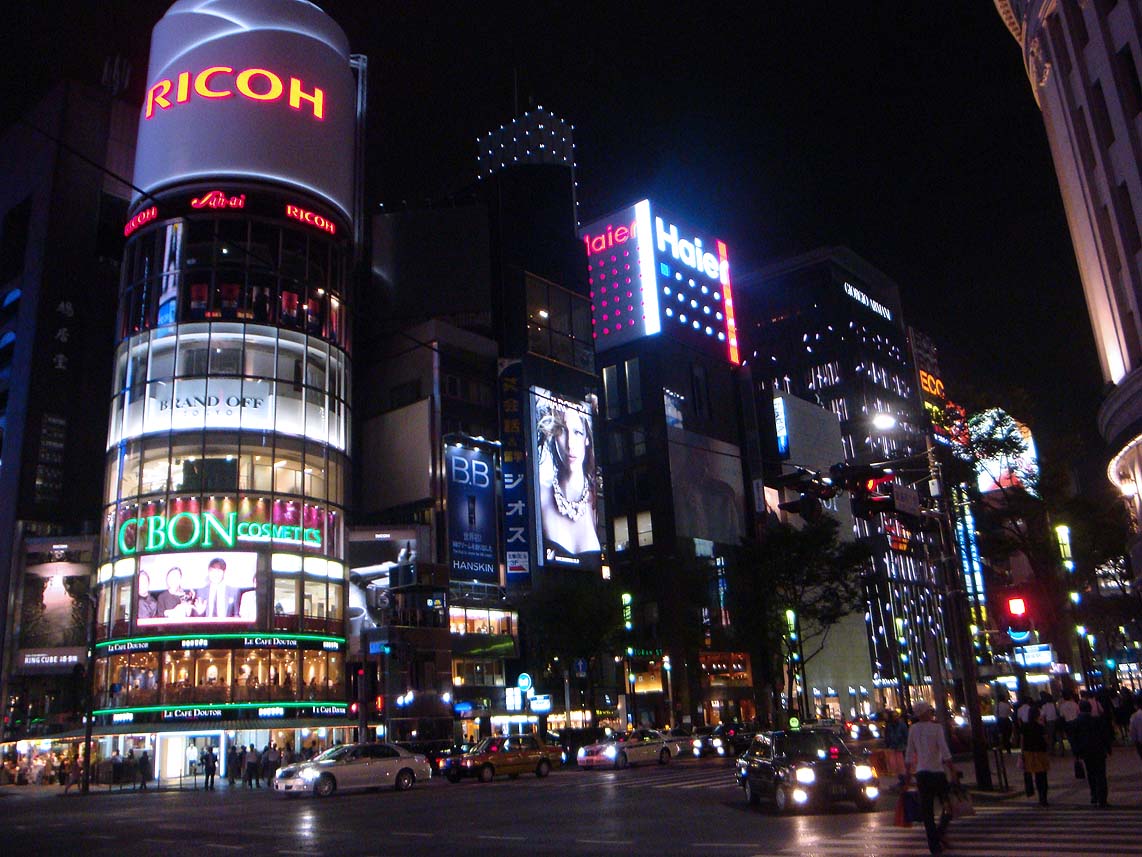
Following the rumours that came out last fall, the Kanze Association has officially announced that the Kanze Noh Theatre will move from its current location in Shōtō, Shibuya to a new building in Ginza, Nōgaku Times (Feb. 2014) reports. The move will be completed in 2016, with the theatre opening in fall. The traditional wooden stage will be rebuilt in the new location, and the hall will be provided with the same number of seats of the current theatre, which will continue to host shows until March 2015. Kanze-kai performances will take place at the Umewaka Nōgakuin kaikan in Nakano until the moving operations are complete.
The current Kanze Noh Theatre in Shibuya
The rationale behind this huge operation stated in the article appear to be the ageing of the current early 1970s building. Moreover, the Kanze Association appears to be prepping up for the 2020 Tokyo Olympics, which will function as a huge attention catalyst for Japan, and a chance to promote traditional arts internationally. However, an article appearing on Gendai Bijinesu(Oct, 6th 2013) hinted at the unstable economic situation of the Kanze Association (i.e. the Noh establishment at large). It seems that, whatever difficulties Kanze is undergoing, they decided to face the crisis with an important investment rather than with austerity, a choice that is up to the expectations for a Noh school often considered to be representative of the Noh tradition in Japan and abroad, and that might well pay off in the long run.
Due to popular demand the Special Opening of Udaka Michishige’s Noh Mask Carving Atelier has been extended. We have received many requests of Japanese and non-Japanese, Kyoto residents and Kyoto visitors who wished to learn about the world of Noh masks from the direct experience of a professional carver and actor such as Udaka Michishige.
Three new dates (February 6th, 20th and 27th) have been added. There are two time slots: afternoon (14:00~17:00) or the evening (18:00~21:00).
This is a great opportunity for those interested in masks and in the mask-making process, as well as in the use of the masks in actual performance: Michishige is the only Noh actor who is also a skilled mask carver, regularly using his own masks on stage. In 2010, Michishige published the photobook The secrets of Noh Masks (Kodansha/Oxford) with photographer Shuichi Yamagata. I have posted more about Michishige’s activities as mask carver here.
If you are in Kyoto don’t miss this chance to be introduced to the world of Noh masks – both Japanese and English speakers are welcome!
Observers are admitted FREE OF CHARGE
Udaka’s atelier is just a few minutes on foot from the Kokusai-kaikan subway stop (Karasuma line).To reserve a place, or for more information, please feel free to contact me here.
‘Magojiro’ by Udaka Michishige. Photo: Fabio Massimo Fioravanti
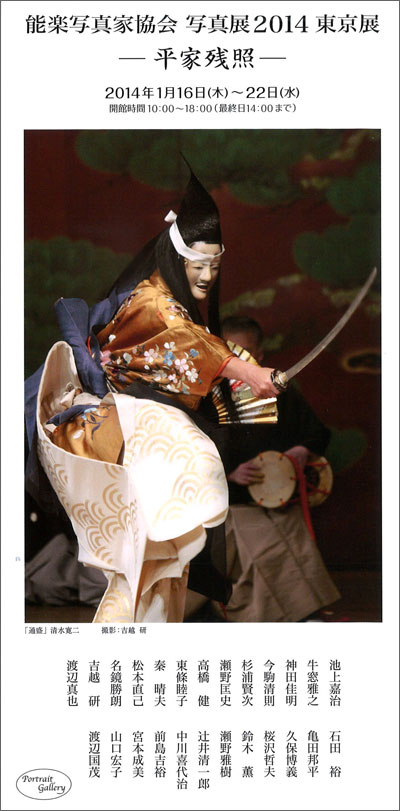
From January 16th to the 22nd at the Tokyo portrait gallery, close to Yotsuya station, members of the Noh Theatre Photographers Association 能楽写真協会 will exhibit pictures collected under the theme ‘Heike zanshō’ 平家残照, or ‘Afterglow of the Heike’. The title refers both to the Taira clan (aka Heike) and to the Heike monogatari, the warrior epic describing the rise and fall of the Heike, and the struggle with the rival Minamoto clan (aka Genji). The photographs portray scenes from the many plays featuring characters (mostly, but not only, warriors) from the Heike monogatari appearing in Noh plays such as Michimori, Yashima, or Hashi Benkei.
What about Noh photography? Just yesterday I was having a twitter conversation with a young Noh professional and a young Noh amateur on the role of ‘creativity’ in traditional performing arts. Noh photography pretty much follows the ‘rules of tradition’. Since Noh photographers are, for better or for worse, part of the Noh establishment, hence they are subject to its rules. Naturally, in order to take photos of a Noh performance it is necessary to get a permission from the performer, who is in turn responsible for the photographer’s presence in the theatre. Usually there is an agreement between the two parts, with the photographer complying with the wish of the actors in order to be allowed to take pictures. This does not necessarily mean that the performer is forcing on the photographer, simply because in most cases the photographer shares the same aesthetic taste of the actor, that is, an aesthetic that is inscribed in tradition. Let me elaborate this.
Like all traditional arts, Noh dance is based on sequences of kata 型, or ‘choreography clusters’ prescribed by tradition, which are transmitted from teacher to pupil, and reproduced on stage. Kata are combinations of movements that have a beginning, a development, and a conclusion, and aesthetic value is attached to how beautifully the kata is executed. Since a katais a movement, its beauty depends on various kinetic factors – how to capture this in a photo? Oftentimes Noh photographers (especially those belonging to the association I am referring to in this post) tend to shoot pictures of a static instant within the kata (often the conclusion) where the actor freezes, sometimes only for a brief instant, on a certain pose – something that kabuki has developed further in mie techniques. Traditionally, Noh photos are shots of ‘still’ kata, and may result in a rather static effect. (See an excellent exception). Since ‘professional’ Noh photographers know the plays very well, they wait for the ‘highlight’ of a scene and then shoot. Obviously actors are aware of this, and make sure to keep the pose long enough for photographers to catch it. I’m not suggesting that actors act for the photographers, but I am pretty sure there is awareness of that, too.
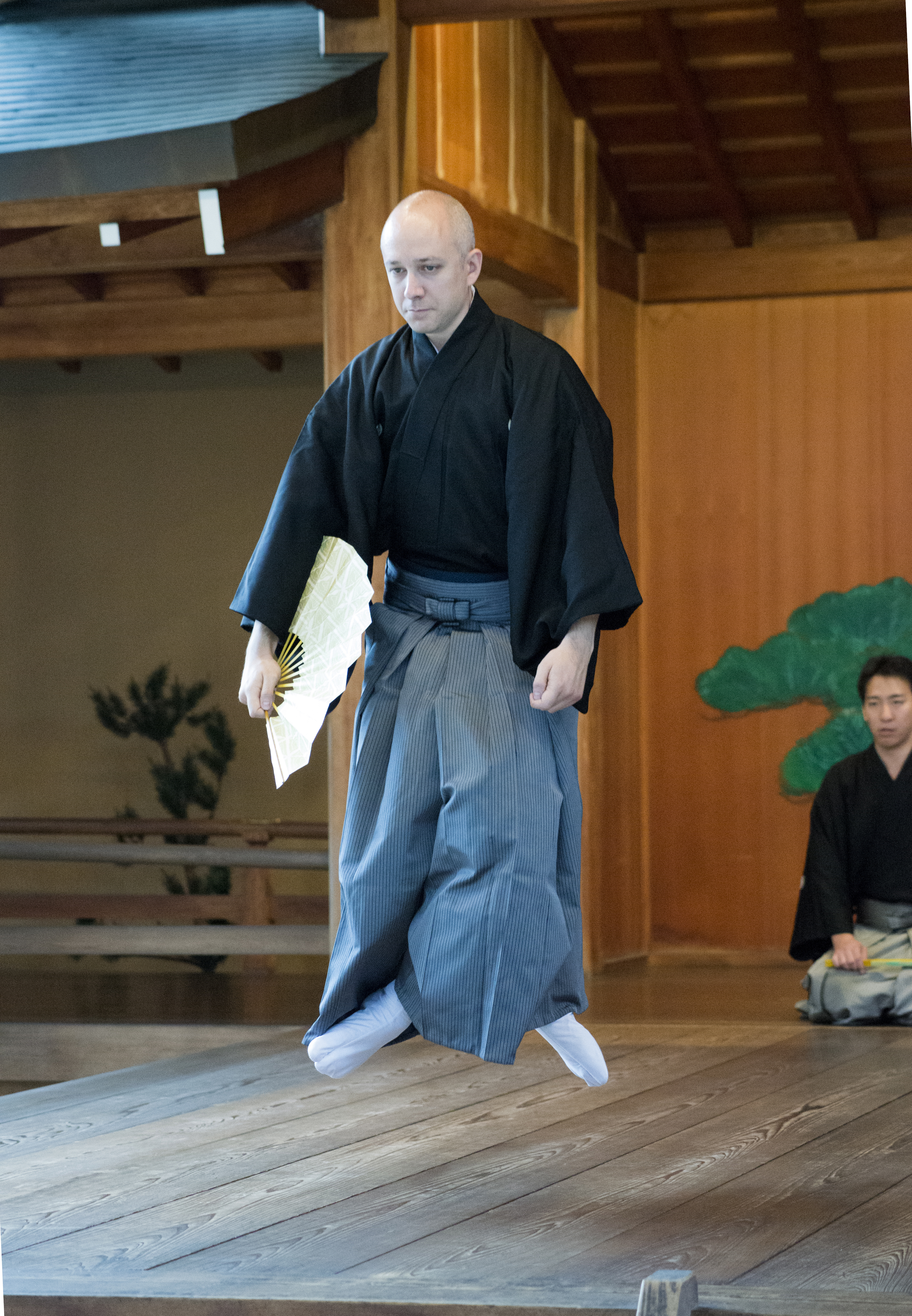
Imperfect gestures: an instant in the sequence of the ‘tobi-hanza’ jump kata. (Photo: Fabio Massimo Fioravanti)
I am reflecting on Fabio Massimo Fioravanti‘s pictures of Udaka-sensei he took during his trips to Japan in the past two years. Massimo is not a ‘Noh photographer’per se, meaning that 1) he was not educated in Japan, 2) he is not a Noh specialist. This provides him with a very different perspective of the stage, which of course is very interesting. Many of his pictures lack the static composition of traditional Noh photography, resulting in a ‘rougher’ yet ‘true-to-life’ effect, something close to what you can see in my picture above. During the editing process of the photo book he is about to publish, we have skimmed through hundreds of pictures, confronting his preferences with those, more used to traditional Noh photography, of Udaka-sensei himself. The result is a compromise between Massimo’s point of view, generally disregarding the perfection of kata, but looking for dynamism and intensity of expression of the overall frame, and Udaka-sensei’s point of view, more concerned with the photo’s capacity to reproduce his idea of formal perfection of his acting.
I will make sure to post more about Massimo’s forthcoming book as well as about Noh photography in general (I did a bit already here). There’s a lot more to say!
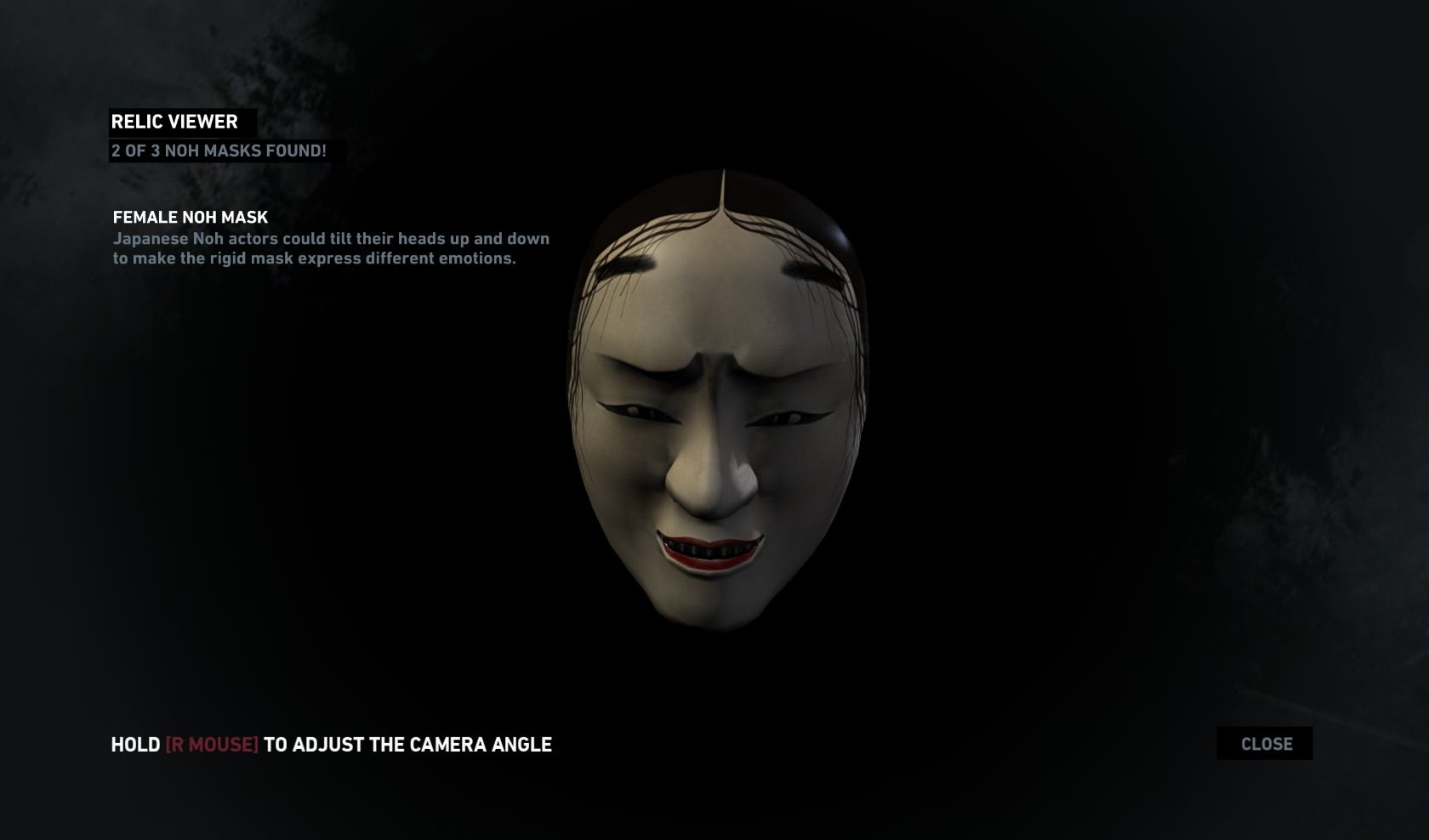
I have shown in other posts how images and suggestions from Noh theatre populate a number of videogames. While Japanese-made videogames such as Tekken or Sengoku Taisen (I doubt this one has even been translated in other languages) contain elements of traditional culture, and Noh is one of them, it is more difficult to find Noh in American productions. Here is an exception! Tomb Raider 2013features three Noh masks as hidden collectible items! I wonder whether the presence of Noh in videogames will spark interest for Noh in the players!
Obviously the names are messed up, but the 3D graphic rendering looks good! The actual names would be namanari (used in some versions of the play Sesshōseki) masugami (for roles of possessed women, as in Makiginu) and something that looks like a ja (an extreme version of a hannya mask, used in a variation of the play Dōjōji).
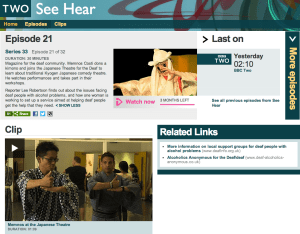
Quick link. Tokyo-based theatre group Japanese Theatre of the Deaf (also on Facebook) performs traditional Kyogen in sign language (shuwa 手話in Japanese). Following up their recent performances in London BBC reporter joins one of their workshops in sign-language traditional comedy. Unfortunately the video only works for those in the UK. I have only recently found out about this company, and their work looks amazing. I am looking forward to learning more about their activities, and how they contribute to spreading traditional performance in areas other genres have trouble reaching.
Japan (as the UK as far as I know) is particularly active in spreading the culture of sign language. Signed news are broadcasted on a daily basis, and I am a fan of minna no shuwa, the sign language course on the national TV educational channel, NHK t-テレ , broadcasted on Sunday evenings. Japanese Theatre of the Deaf also offers multi-level sign language classes.
Today was the first of two days of ōsōji, the seasonal cleaning taking place in Japan before the New Year, at Udaka-sensei’s okeikoba training space. This kind of cleaning is performed everywhere in Japan (homes, shops, workplaces, etc.) and is part of the rituals that welcome the Japanese ‘early spring’ (shoshun 初春), that corresponded with the month of January in the traditional calendar – so it is a kind of ‘spring cleaning’, except that you open all doors and windows to clean, and that it’s usually terribly cold. In fact it’s even snowing today.
Anyway, today myself and other members of Udaka-sensei’s group met at the okeikoba to start cleaning up. The first thing we needed to do is reorder a section of the utaibon Noh libretti, that you see in the picture here. As you notice they all feature the same kamon family seal of the Kongō family printed in gold on the cover. Each of the five shite main actor schools produces their own utaibon, which are sold both to professionals and to amateurs. The content of the utaibon differs from school to school, but it normally consists of the text of the play with minimal instructions on how to sing. While some schools also include information on performance and small drawings, the Kongō utaibon only contain basic information about the characters, a resume of the play with some background information, and notes about important poetic passages in the book (whether they are quotes of classic texts, sutras, etc.). I should probably post more about utaibon in a dedicated post, as there is so much to say about them. The ones you see in the picture are shinpon or ‘new books’, while kyūhon or ‘old books’ have a white cover, and are way more difficult to read. Ok will write more about it later.
I have posted on the presence of Noh in videogames elsewhere, but I recently found this and I felt compelled to share. Apparently one of the characters in the popular videogame Sengoku Taisenis Shimotsuma Shōshin 下間少進 (1551-1616), here under original (I think) name, Nakataka. Shimotsuma Shōshin was a high ranking monk at the Honganji temple in Kyoto, as well as skilled Noh performer of the Konparu style – he performed up to 70 plays in his career! As politician, he was first affiliated with the Oda family and, later, with Toyotomi Hidetsugu, of whom he was Noh instructor. Shōshin is an important figure in the history of Noh, especially because of his record of Noh, Nō no tomechō 能之留め帳, but I thought he would be too specific to see him in a videogame. I was wrong!
As for his ‘portrait’ below… what an interesting mix of fanciful Noh costumes, oversized buddhist beads, and visual-kei haircut!
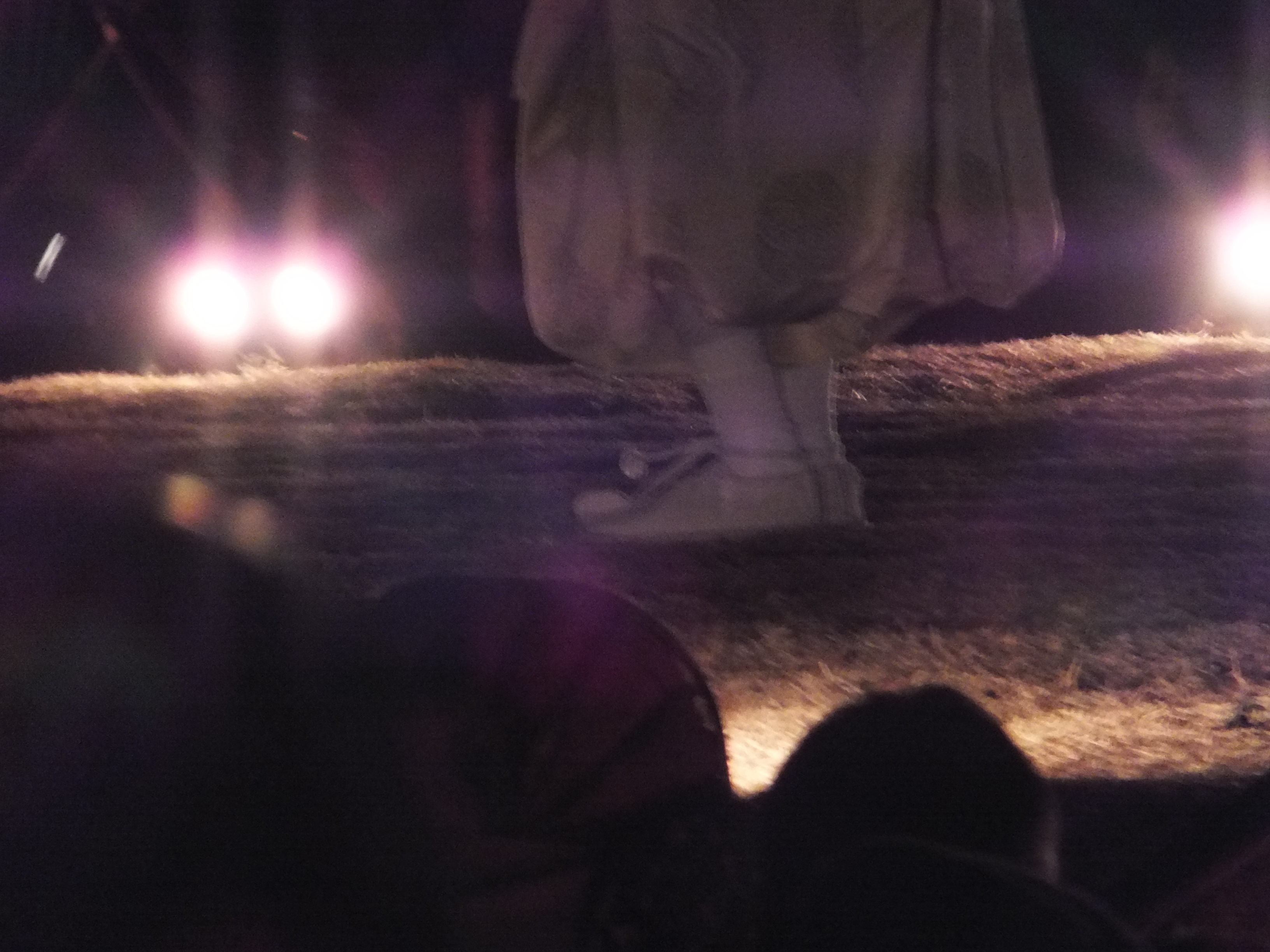
Yesterday I went to theOnmatsuri festival at the Kasuga Wakamiya Shrine in Nara. I was invited to attend a special sequence of performances called Tabi shosai, staged in front of a shrine where the god is temporarily residing. An academic treatment of the festival can be found here. I wish I had more time to talk about the performances here, but I don’t. Yesterday it was cold and dark (after 16:30) so I could not take good pictures. However, I wanted to share here a the only few snapshots of a performance that was listed as sarugaku in the programme. It was in fact kagura-shiki, a stripped-down version of Okina usually performed without mask and with plain white costumes instead of the usual okina-kariginu embroidered cloak. This kind of performance is often staged around this time of the year by high-ranking Noh actors. Other analogous acts, part of a ritual sequence called ‘under the pine tree’ such as yumiya tachiai, were performed in the morning. All performances take place on a ‘lawn stage’, the front facing the shrine, so performance need to wear special shoes instead of the usual white tabi socks. These performances remind us of the ritual origin of Noh, though the contemporary staging of such rituals has naturally changed with time. Here are a few pictures:
Matsu no shita, ‘under the pine tree’ – Yumiya tachiai, in an old postcard, showing exactly the same ritual that is performed todayKagura-shiki: the ji-utai chorus seen from the back. On the left, the temporary shrine where the god resides.OkinaSpecial shoes worn over tabi
I blogged about Ichikawa Kon’s 1991 thriller set in the world of Noh 天河伝説殺人事件 (Tenkawa Densetsu Satsujin Jiken) ages ago. The YouTube trailer I linked was taken down, but I now realise that it has been re-upped elsewhere, so I re-link it here.
This is an update after having seen the film – you should watch it if you are a Noh nerd. As far as I know it is only available in Japanese and the version I own has no English subtitles. Tenkawa-jinja in Nara prefecture is a real place, and still preserves the jo old man mask that Motomasa, Zeami’s son, offered to the sanctuary before his death, still shrouded in mystery. The events around Motomasa’s death have been recently dramatised in Umehara Takeshi’s Super Noh: Zeami, of which I wrote a criticism so spicy that I need to re-read before publishing. This is something I wrote about it before attending the performance in Osaka last summer.
According to the business magazine Gendai Bijinesu (Kodansha) the Kanze Nōgakudō in Shōtō, Shibuya, one of Tokyo’s most exclusive residential areas, may be soon put up for sale. In the article reporting the news, the land on which the theatre is now built, measuring 840 tsubo (approx. 2,777 square meters) is stated to be worth over 30 billion yen (approx. 30 million US dollars). Fujisawa Shōwa, owner of Yodobashi Camera, who lives in the neighbourhood, has been identified as a potential buyer. According to an unspecified major real estate company, the Kanze-kai (that is, the company that owns and manages most of the Kanze school property) is considering selling the theatre. Of course – I would add – selling does not mean shutting down the business, but simply relocate elsewhere while cashing what is an extremely valuable piece of land in the heart of Tokyo.
The Kanze Noh Theatre, Shibuya, Tokyo (Google street view)
What crisis?
How to interpret the potential sale of the Kanze Nōgakudō? Could it be justified with a need to renovate the venue? Or is it yet another sign of the crisis that is tightening its grip on the Noh establishment? The post-Lehman financial shock is only an additional factor to a more specific, economic but also cultural (can we separate the two?) crisis that Noh is undergoing since the early 1990s. The Noh audience is ageing, therefore naturally reducing, a trend that might lead to its biological extinction within some 20 years, unless critical measures are taken. According to the Gendai Bijinesu article, the Kanze-kai has shown a loss amounting to 10 million yen between the 2009-2011 fiscal years. However, the manager of the Kanze Nōgakudō has explained that, after the 2011 Tōhoku earthquake, the construction of a safer building has been discussed, and that money is not really the issue. What we should be more concerned with is the ageing of the Noh audience, and the consequent need to make efforts to attract a new generation of young spectators.
This is certainly true, and it would impact on the economic condition of Noh the large majority of Noh actors, who are in need of financial support in order to continue to perform their art. Of the three great performance traditions of Japan, Noh is the only one which, after having lost its aristocratic patrons with the advent of the Meiji restoration, is struggling to survive while maintaining its economic independence, counting primarily on amateur practitioners who learn directly from professional performers (and pay directly to them). Kabuki is managed (owned?) by Shōchiku, a huge movie and theatre production company, and is supported by corporate sponsorship. Bunraku has lost the battle, and is now surviving thanks to public subsidy. Noh still lingers in a limbo between feudalism and capitalism. Meanwhile actors who can’t make ends meet sell their costumes, masks and books, while Wanya-shoten and Hinoki-shoten, publishers of Noh books, close shops in Tokyo and Kyoto. Does Noh need a new economic model in order to get out of this darkness?







 The Noh Diaries