Selfish photography

I got myself a new camera and today I happened to go to a traditional performing art recital. I realized that I spent more time playing with my camera than actually watching the performances. I was in good company: many people around me were doing the same thing. Reflecting on what I was doing I realized that my pleasure was self contained in the action of taking picture. As soon as a performer stroke a pose, I would take a picture of him or her, only to direct my gaze at the LCD screen after that, therefore not watching the rest of the performance. It felt a little bit like ‘stealing’, or ‘taking advantage’ of them. I’m sure this is a ethical issue professional photographers often encounter…

However, as occasional photographer I could not help thinking that the value of my photographs is essentially personal. Most of my pictures will stay in my hard drive and no one will ever see them. I won’t either sell them or show them. The value of my action ends with the action itself. As a spectator, I wasn’t a very good spectator. I was more interested in pictures than in performances, and it is now clear that my photographing was selfish.

I don’t want to moralise here, but reflect: attending a performance is one thing, taking pictures of it is an entirely different thing! Or maybe the reason why I don’t feel happy about this is because maybe 50 other people around me were doing the same. And I know how this looks like when you are on stage.

Digital cameras are everywhere nowadays (as I write I could take pictures with at least 3 objects within 50cm from where I sit). They should be handled with care. Care is the right word. We should think twice before taking useless pictures, they pollute the digital and also the analog ecosystems.

20130809-193342.jpg

14th ‘Seiran Noh’ – MIDARE, FUTARI SHIZUKA

Seiran_1

The Seiran-Noh (青蘭能) is a yearly performance at the Kongo Noh theatre in Kyoto featuring Udaka Michishige and his sons, Udaka Tatsushige and Udaka Norishige. Until now known as ‘Seigan Noh’, the event has recently changed its name into ‘Seiran’ honouring Udaka Michishige’s great-grandfather, painter Kawada Shoryo (1824-1898), who was closely related to Sakamoto Ryoma, one of the central characters in the Meiji restoration. Kawada’s favourite flower was the orchid (‘ran’ 蘭).

See below for ticket reservation

This year’s Seiran Noh (8 September 2013) features the Noh Midare, a special variation (kogaki) of the Noh Shōjō in which the midare-ashi a particularly unusual and challenging dance, is performed instead of the usual chu-no-mai medium tempo dance. Midare is a hiraki-mono, one of the plays marking a performer’s passage into a new phase of their career. This year Udaka Norishige will perform Midare, follow ing his father and elder brother’s steps.

The second play is Futari Shizuka, (‘Two Shizukas’), a third category play based on happenings and characters from the Genpei War tales. The special feature of this play is the instrumental dance performed by identically dressed shite and shite-tsure: the spirit of Minamoto no Yoshitsune’s lover Shizuka Gozen and a woman possessed by her. Futari Shizuka will be performed by Udaka Michishige and his eldest son, Udaka Tatsushige.

8 September 2013・The 14th  Annual Udaka Seiran Noh Performance

Kongo Noh Theatre 1:30~5:00 p.m. (doors open at 1:00p.m.)

Noh: FUTARI SHIZUKA

Shite: UDAKA Michishige, Tsure: UDAKA Tatsushige

Kyogen: KURI YAKI

Shite: SHIGEYAMA Shime, Ado: SHIGEYAMA Motohiko

Noh: MIDARE

Shite: UDAKA Norishige

Tickets: Center Reserved Seats 7,000 yen, Side Reserved Seats 6,000 yen, General Admission Mid-center Seats 5,000 yen, Student, General Admission Mid-center Seats 2,000 yen

Synopses of the plays will be available at the theater in English, French, German, and Italian.

Contact me for information and ticket reservation


Call grandpa, there’s Noh on TV

This is the face of traditional theatre on the national ‘educational’ channel, NHK’s Eテレ (e-tele), broadcasting programs on traditional performing arts between 22:00 and midnight. In a roundtable on the decrease of Noh amateur population published on Nogaku Journal in 2010, critic Horigami Ken complained about how dull TV programs are today, claiming that the absence of classical arts on TV is one of the reasons why young people today are not interested in Noh.

Nippon no geino

Yes, I too would like to see more Noh on TV and, preferably, I would not like to see it introduced by this nice&tidy couple of presenters, interviewing old geezers and kind baachan dressed in sober kimono, gently bowing and speaking in softly. Noh is everything but gentle or soft. It’s not something to be nodded at from behind a glass case (be it a TV set or a museum stand). Noh is magnificent, powerful, heartbreaking, enlightening. Not for the faint of heart, I daresay. Have you seen this program? Certainly NHK, like much of the Noh establishment, don’t care much about trying to reach new audiences, and only feed the progressively aging spectatorship that started following it in the 1960s. Noh is not only for them. Give us the real thing, not this pre-digested glop, only good for retirement home entertainment.

Thoughts on IFTR 2013

20130730-114826.jpgBack from the IFTR 2013 conference at the Institut del Teatre in Barcelona. Spanish organisers Boris Daussà-Pastor and Mercè Saumell did a terrific job coordinating what has been the biggest IFTR ever, with more than 800 participants (!), distinguished keynote speakers and thought-inspiring presentations. Japanese theatre was present in various working groups, not only in the Asian Theatre working group, coordinated by Mōri Mitsuya and Nagata Yasushi, but also in Dance, Theatre and Religion, Theatre Historiography, and others. I particularly appreciated Tsutsumi Harue (Seijo University) on ‘The Production of Hyōryū kitan Seiyō kabuki (The Wanderer’s Strange Story: a Western Kabuki) (1879) and the Journey of Iwakura Embassy (1871-1873) and Hiranoi Chieko (Hosei University) on the ‘History of Local Amateur Kabuki, Ji-shibai, the latter being particularly pertinent to my current work on Noh amateurs. Noh theatre, as expected, only had one representative – myself. My presentation was on the ethical dilemma of a Noh scholar-practitioner who is divided between the loyalty to a teacher and the ethos it represents, and the need for freedom to formulate and express criticism.

The lack of Noh at IFTR cannot but point to the need of a more international (intercultural?) and interdisciplinary approach to Noh in the wider context of theatre and performance studies. We ‘new generation of Noh scholars’ should join forces and open up the knowledge of Noh qua performance, not only as study material for translators and historians.

Suzuki Tadashi on Noh theatre

20130717-101228.jpg

On Saturday 13rd July I attended Suzuki Tadashi‘s presentation 「能」に期待する (Expectations on Noh) at Otsuki Nogakudo in Osaka. The event is part of the series 能の魅力を探る, ‘investigating the charm of Noh’, organised on the occasion of the 650th anniversary of Zeami Motokiyo’s birth, and presented by Noh scholar Amano Fumio.

I was excited to be able to attend one of his rare forays into the public – recently Suzuki does not seem to leave his house in the mountains very often. In the 1970s Suzuki has done quite a lot of work with Noh and Kyogen actors, especially Kanze Hisao, Kanze Hideo and Nomura Mansaku, who belong to a generation of Noh professionals excelling in their art and open to experimenting in other fields. Suzuki’s famous ‘method’, now widely spread across the globe, has been allegedly influenced by Noh training. Carruthers/Yasunari’s book is a standard if you want more reference on his work.

The talk was followed by the dokugin solo chant from the Noh Ashibikiyama (足引山), performed Otsuki Bunzo, and the shimai dance excerpt from Tamamizu (玉水), performed by Kanze Tetsunojo, Hisao’s son. Both plays are fukkatsu, ‘restored’ plays that were not staged for a long time until recently.

Now a few words on Suzuki’s talk. I must admit I was not impressed. Most of it sounded like the grumblings of an elderly man against the malaise of modern civilization. His main point was how we humans have lost the ability to use their ‘animal energy’ (動物性エネルギー) because we use electricity, gas, oil in order to operate machines that work in ourplace. Complaining about how today’s youth have lost the ability to communicate, as they are only able to look at their smartphones (are FB and Twitter not a way to communicate?), Suzuki continued by praising Noh because it only uses ‘human energy’.

Of course Suzuki is, generally speaking, right about saying that Noh is one of the few performance traditions that still is largely man-powered, with the exception of the halogen lights illuminating the stage. Having said that, listening to Suzuki speaking was not particularly interesting and I strongly doubt it helped to show the ‘charm’ of Noh. Which ‘charm’ anyway? I am fascinated by Tanizaki’s aesthetic of shadows but I also think that such reactionary or nostalgic attitude is not going to help Noh move forward. Rejecting all that belongs to today’s generations, including Internet, smartphones, computers, machines, etc. equals to rejecting those whose lives are deeply influenced by all this. I am not an advocate of digitalisation of Noh, but I am concerned with what is going to happen to Noh in some 20 years, when a good percentage of its contemporary supporters are likely to be dead. We need to find a third way.

After the performance Kanze Tetsunojo, Otsuki Bunzo, Amano Fumio, Suzuki Tadashi (with an average age of 67.25) were on stage for a panel on Noh. I know this mights sounds harsh and I hope you will not think that I have no respect for experience and age, but, as I put myself in the shoes of one who meets Noh for the first time at a conference with a famous contemporary theatre director, I cannot help feeling that Noh is something that more and more risks to be a property of the old age. Fandom is built through admiration but also through identification. To what extent can young people in the early twenties identify with elderly men and women who represent the old-smelling (furukusai) world of their grandpas?

We must act, and I wonder what I can do… I think it is important to promote the work of young actors more than it is currently done by the Noh society.

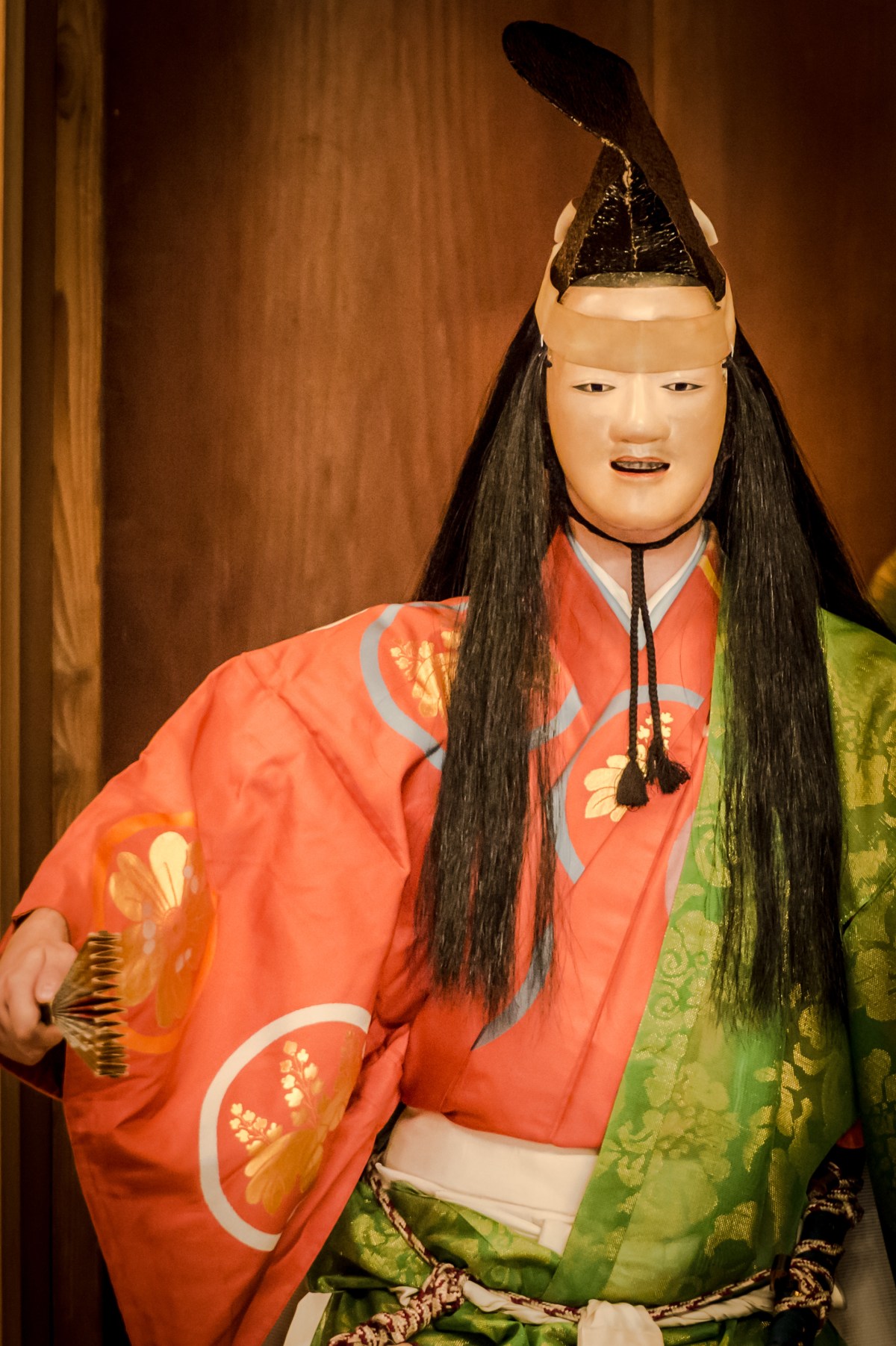
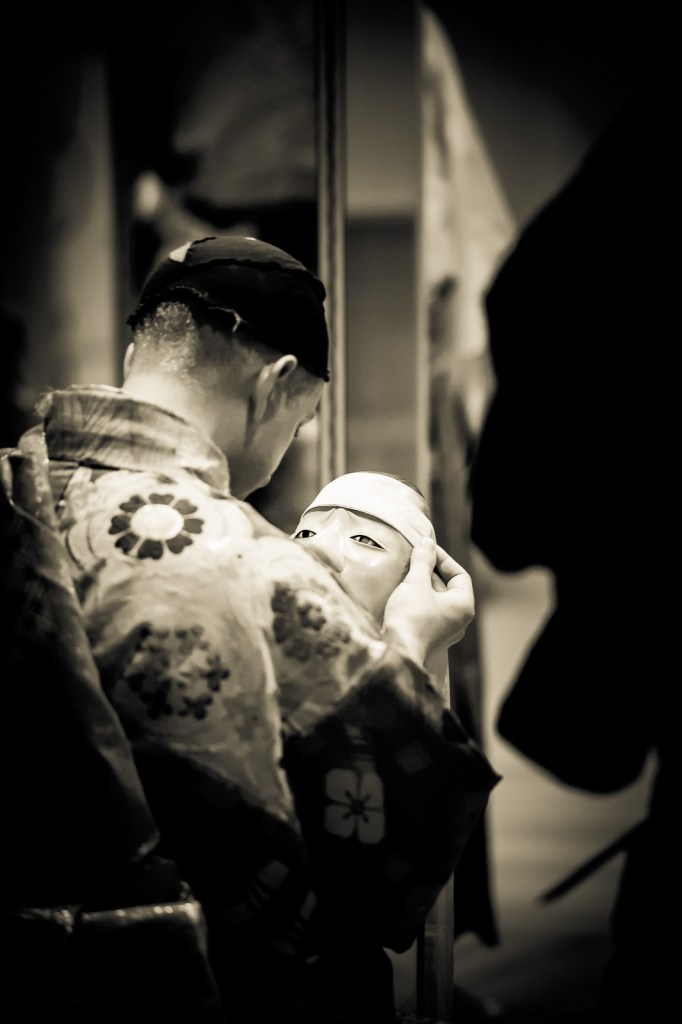
Kiyotsune seen by Stéphane Barbery

Kyoto-based French photographer Stéphane Barbery has worked with a number of Noh actors in Kyoto over the past few years, and has developed a special eye for capturing meaningful moments in the performance. Photographers working with Noh have to endure the torment of being assigned a fix position from where they can only shoot using a powerful zoom, hence losing much of the tridimensionality that the Noh stage in particular is able to convey to its audience. Stéphane mostly works with B&W which allows him to sharpen details and recreate depth even in low light conditions. I am sure you will agree he has done a wonderful job.

I am reposting a couple of stills from Kiyotsune (both the performance and the dress rehearsal) but I invite you to visit his Flickr page to see more of his amazing work!

Enjoy!

Diego

9275631890_5493538ce6_b

9272844801_0d3c97d34e_b

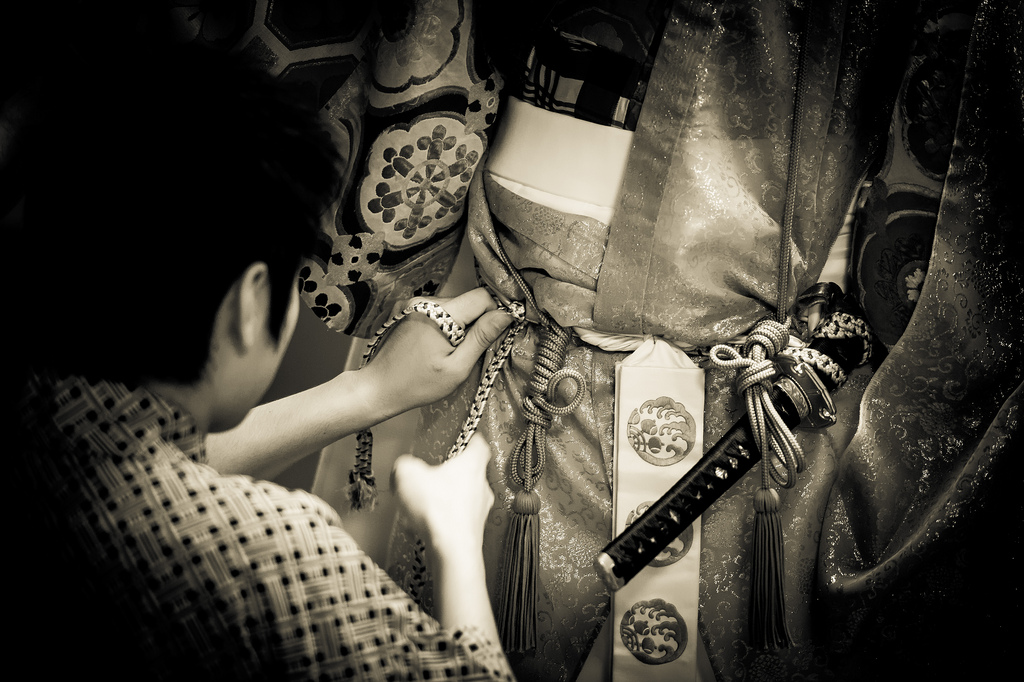
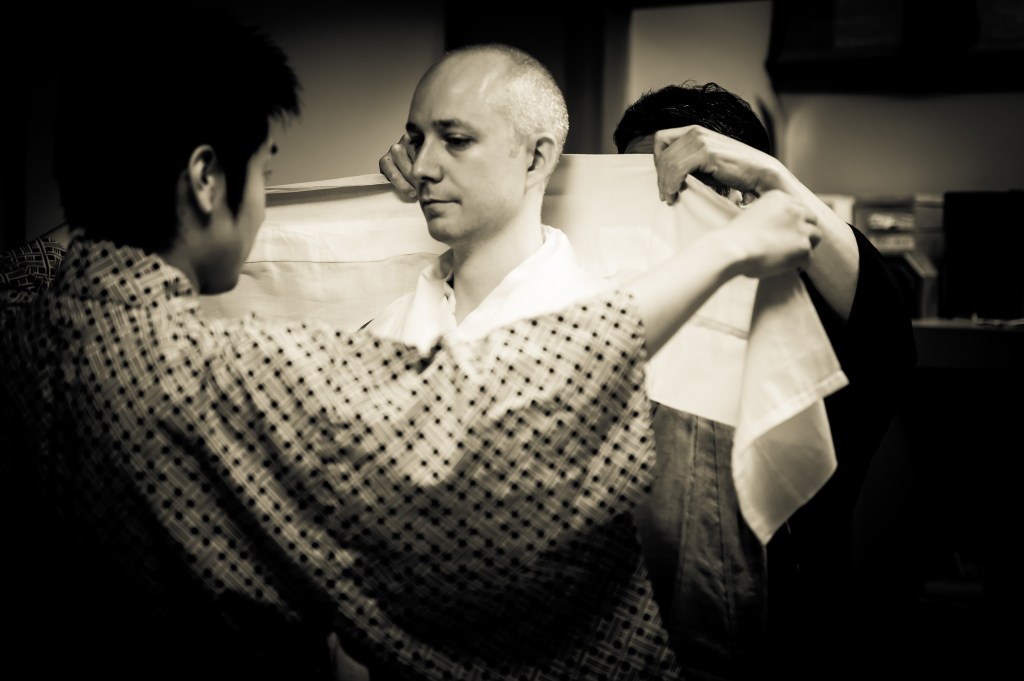
Moshiawase donning

Collected works of Horigami Ken

photo-1

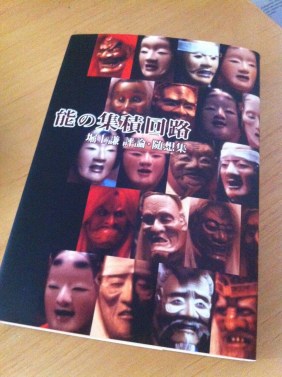
I have recently purchased Horigami Ken’s Collected Works on Noh. Horigami, editor of  the now discontinued Nogaku Journal, is one of the few Japanese Noh critics who actually say upfront what they want to say. I very much appreciate his lucid performance reviews and insightful analysis of various more or less controversial aspects of the Noh world. I suggest this book to all those who are interested not only in the artistic and aesthetic face of Noh, but also in its contemporary cultural (i.e. political and economic) context.


‘Cremona’ rope

Cremona rope

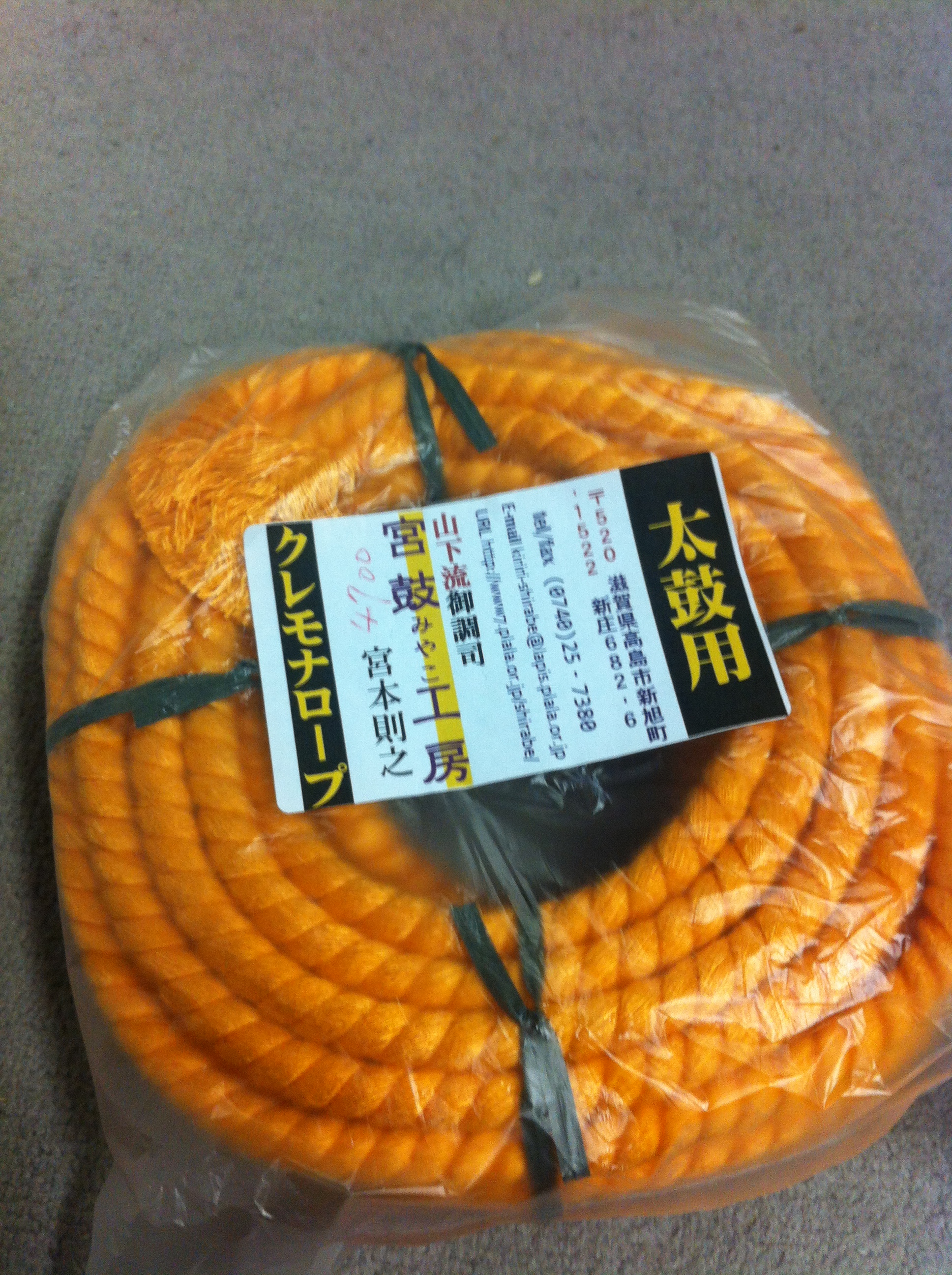
This is the kind of rope we use to tie up the two skins of a taiko stick drum. My teacher recently got this in order to replace the one on his taiko in Kyoto, which started to fray despite numerous applications of tsubaki abura (camelia oil). The label says, on the right, 太鼓用 (for taiko) and on the left クレモナロープ (Kuremona rope)… Cremona?

Cremona is a beautiful Italian city in Lombardy, famous for its violin-making tradition and the cathedral, just an hour drive away from my hometown, Brescia. I was wondering what kind of connection the city might have with Japanese taiko… I started fantasizing of XVI century missionaries from Cremona visiting Japan and transmitting the ancient rope-making tradition from Cremona.

A quick Wikipedia check demolished my fantasies: first of searching for ‘Cremona rope’ does not even bring up results other from Japanese pages, which points toward the label as being a Japanese invention. Second, Cremona rope is far from being traditional: it is a mix of vinyl and polyester fibers. Third, Cremona rope is made only by Japanese producer Kuraray – spelled クレラ (KURERA) in katakana. クレ is rendered KU-RE in alphabet, which can be rendered as CU-RE (kɾe) by Italian readers. KU-RE is the way Japanese spell KRE or CRE sounds, adding the [u] sound between K and RE.

Long story short: KUREMONA is not Cremona [kɾeˈmoːna] but a pun with KURE from Kuraray and something else which I don’t even know. Blah.

Bye.

Adrenaline

I was listening to this radio show about extreme sports… Among the various neurotransmitters rushing whenever we are exposed to danger is adrenalineAdrenalin rush affects our body in various ways – among these, it helps fixation of memories. Experiencing danger triggers adrenalin release, making such experience extraordinary and unforgettable. This seems to have a pedagogic purpose: our body learns how to act efficiently even when we have no time to think. This is beyond instinct; rather, it is an unconsciously acquired skill.

265px-Adrenalin_-_Adrenaline

I often think that Noh offers many situations of danger, which can be both ‘artistic’ (in Noh there is very little room for improvisation, hence the condition of constant ‘alert’) or physical (i. e. the danger of falling of stage). Performing Kiyotsune last week provided the chance to feel adrenalin rush on various occasions. Other situations of danger, giving rise to heightened senses, are okeiko (lessons, in the traditional arts) especially when my teacher is not in a particularly good mood (or when he is). As I progress on the way of Noh my training becomes stricter, and I noticed that my teacher tends to put more pressure on me when he teaches me, often interrupting my movements to briskly correct, hammering on the same gesture, expecting repeated correct executions before moving to the next step, etc. These are not straightforwardly ‘perilous’ situations, but they still retain a certain degree of danger, as failure to live up to a certain standard will result in my teacher’s disappointment. Exams are dangerous. In other words, strict, tough training, sometimes even involving physical contact of sorts, can effect our brain positively, inasmuch it helps ingraining the teaching in the body. The following step is learning how to manage the rush effectively as it happens.

In conclusion I wanted to add that adrenaline is released in dangerous situations along with another hormon, dopamine, a chemical whose effect we common describe as ‘pleasure’. I will let you draw your own conclusions on this…

– Diego

Mt. Fuji

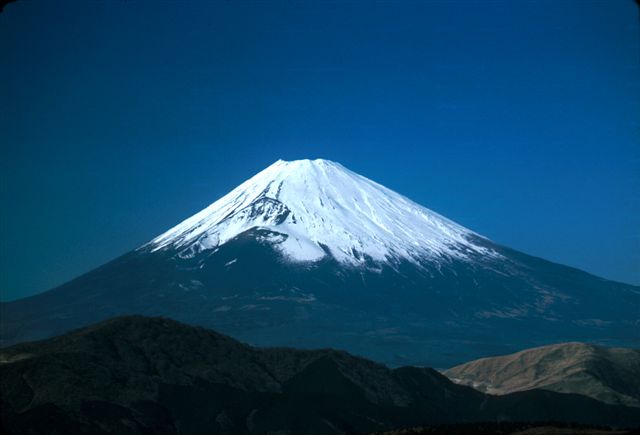
Udaka Michishige sees the Noh world as Mt. Fuji, which recently gained the World Heritage Status by UNESCO.

MtFuji02

At the bottom is the general public, those who see Noh occasionally, who have a interest in it and respect its tradition.

Above them are Noh theatre-goers, for whom Noh is more than just an occasional pastime. Among them are Noh amateurs, who support actors attending many performances, and who in turn study Noh and contribute to its diffusion.

Then are hayashi musicians, waki actors, and kyogen actors. Their art provides the foundation for all Noh performance.

Above them, close to the top, are shite actors, whose training is complete in all aspects of Noh performance. They, more than anyone else, have the responsibility for the transmission of Noh tradition.

At the top are costumes and masks. Udaka-sensei symbolically values these ‘objects’ above ‘people’. He did not elaborate much on this proposition. I can think of various reasons why, but I am sure of none, so I would rather not over-interpret this. Certainly masks have been considered not simply as man-made performance tools, but as receptacles of higher energies. It might be possible to interpret this both from a spiritual-religious and an anthropological perspective, of course.

Above the top are clouds, sky, stars, even more mysterious and wondrous than Mt. Fuji itself. That is yugen, the indescribable beauty, profound abyss, or fathomless universe of Noh.

fujilenticular