Noh Flute Workshop At Royal Holloway – London

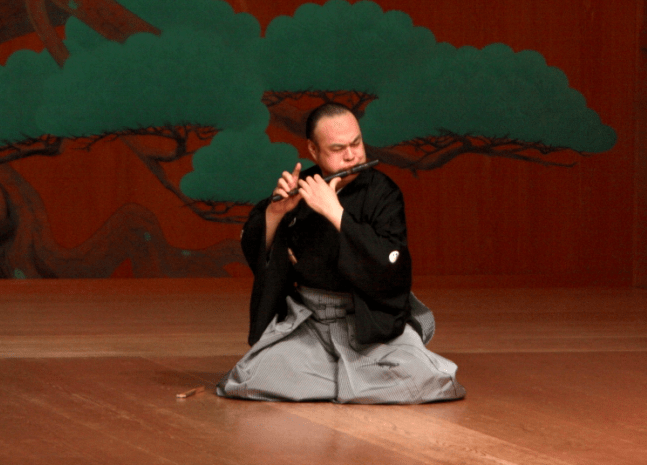
Noh flute master Fujita Rokubyoei is giving a workshop Royal Holloway University of London, where I did my PhD. This is a great chance for those of you who are in the London area to learn about noh music from one of the top-ranking performers in Japan. Royal Holloway has a great space for noh performance that has been neglected, and I am pleased to see the Noh Training UK project is making very good use of it.

The workshop takes place on Thursday 25 February 2016 and is FREE of charge.

All details here.

If you can’t go, you can still enjoy this video of Fujita-sensei playing the jo-no-mai music for a slow tempo dance.

Noh changes with imagination | Tatsushige Udaka | TEDxKyotoUniversity TEDx Talks

inikyoto's avatarThe International Noh Institute

Udaka Tatsushige’s TEDxKyotoUniversity talk on Noh is finally available with English subtitles! Enjoy and let us know what you think!

Noh, a classical Japanese musical drama, is not just what you see with your eyes, but what see with your mind too! This talk/performance will show you that in interpreting Noh, imagination is your limit!

Tatsushige Udaka was born in Kyoto, and started his career in Kokata acting from the young age of three years old. He was trained by the 26th head of the Kongo School, Hinasori KONGO, as well as by his father, Michishige UDAKA. Performing since he was young, he has had extensive stage and teaching experience in Noh Threatre. He has travelled, performed, taught, and demonstrated Noh in Japan, South Korea, France, and the United States throughout the last decade. Currently, he is based in Kyoto.

View original post

Why Kyoto is now the centre of Japanese contemporary theatre

A bit off topic for my blog, but a good, positive way to start the year with some good news.

William Andrews's avatarTokyo Stages

No one likes sweeping statements and generalisations, and I’m not about to fall into that trap. Nonetheless there is a real case to be made that the most exciting centre for contemporary theatre and the performing arts in Japan today is not what was once called the “east capital”, Tokyo, but that older capital lying to the west, Kyoto.

This is not just about how many artists and directors are based in Kyoto, though it is certainly home to a significant number of solo artists and companies, including contemporary Kabuki troupe Kinoshita-Kabuki, Takuya Murakawa, and Kunio Sugihara.

No, Kyoto’s claim to be the new hub for Japanese contemporary performing arts is threefold.

Firstly, we now have ROHM Theatre Kyoto. Opening January 10th as part of a major renovation and redevelopment of the 50-year-old Kyoto Kaikan, ROHM Theatre Kyoto will be a major cultural hall and hub for a range…

View original post 735 more words

[FREE] 2016 New Year Noh performances

Okina - Kongo Hisanori
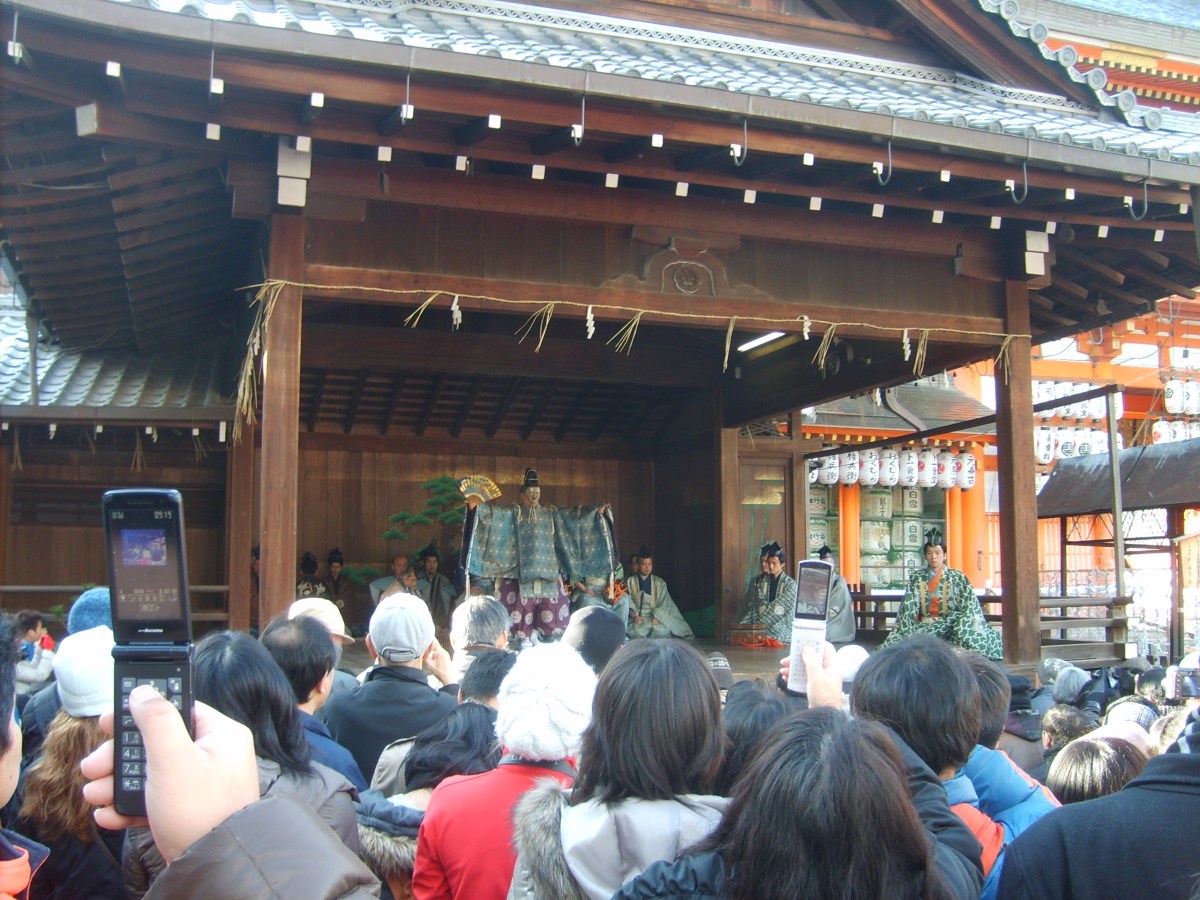
Okina – Kongo Hisanori (Yasaka-jinja, Kyoto)

The New Year period is a busy time for Noh actors! Augural plays wishing long life and happiness are performed at various locations, especially Shinto shrines. If you are in Kyoto during the first week of January 2016, I recommend that you check out these FREE Noh performances.

Link to a (partial) performance calendar of the Kongo school here)

  • January 1st Friday from 12:30 @Heian Shrine. Ritual Noh performance. Okina. Shite: Kongo Hisanori.
  • January 3rd Sunday from 09:00 @Yasaka Shrine. Okina. Shite: Katayama Kuroemon. Shimai: Tsurukame. Shite: Kongo Hisanori.
  • January 3rd Sunday from 12:30 @Kongo Noh theatre. First performance of the year. Recitation of the chant of Okina, shimai and maibayashi (Iwafune Shite: Kongo Tatsunori).


Symposium and Performance Demonstration Interactive Interplay: Waki and Ai-Kyōgen Roles in Noh

12194743_10153202972612335_9101868504274704354_o

JPARC – Japanese Performing Arts Resource Center Lecture Series
ARC – Art Research Center, Ritsumeikan University

Symposium and Performance Demonstration
Interactive Interplay: Waki and Ai-Kyōgen Roles in Noh

Date November 17, 2015 15:00-20:00
Place: Ritsumeikan University, Kinugasa Campus. Art Research Center. Multipurpose room.。


This event consists of two parts. The afternoon symposium (in English with discussion in Japanese) will address the importance of waki and ai-kyōgen roles in late-Muromachi period noh with reference to building an interactive text of the play Funa Benkei for the JPARC database. In the evening demonstration (in Japanese), kyōgen and waki actors will discuss their roles in Funa Benkei, and perform portions of the play.

Symposium  15:00-17:30
15:00 Opening
15:20 Presentation (in English): ” Important auxiliary characters – the case of Funa Benkei and late Muromachi noh plays” by Dr. Lim Beng Choo, National University of Singapore
15:50 Presentation (in English): “The sonic comic: How kyōgen actors create a scenic soundscape” by Dr. Jonah Salz, Ryukoku University
16:30 Break
16:50 Presentation (in English): “Traditional Japanese Theater Websites and the Aims of the JPARC Website” by Dr. Diego Pellecchia
17:10 Round Table Discussion (in Japanese and English) “Purpose, Problems, and Perspectives on Creating Bilingual Interactive Texts, the case of Funa Benkei.” Discussants: Akama Ryō, Diego Pellecchia, Monica Bethe, others
17:40 Break (light refreshments will be provided)
Performance demonstration (in Japanese) 18:30-20:00
“Waki and Kyōgen Players in Late Medieval Noh, the case of Funa Benkei.”
Performers: Izumi Shinya (Kyogen actor, Izumi-ryū)
Arimatsu Ryōichi (Waki actor, Takayasu-ryū)
Oka Mitsuru (Waki actor, Takayasu-ryū)
Introductions: Diego Pellecchia

Towards a Community of ‘Amateur Creativity’ Research?

Here is a great review of the symposium ‘Amateur Creativity: Inter-disciplinary Perspectives’ – delighted to read that my paper on Amateurs in Noh Theatre was so well received!

jonathan1984gross's avatarGet Creative Research

Within days of beginning the Get Creative Research Project we came across the AHRC funded initiative, ‘Amateur Dramatics: Crafting Communities in Time and Space’, and were excited to find that a symposium coming out of the project would be taking place at the University of Warwick in mid-September. The Amateur Dramatics project – of which Helen Nicholson is the Principle Investigator – is a collaboration between Royal Holloway and the Universities of Exeter and Warwick, where co-Investigators Jane Milling and Nadine Holdsworth are based respectively. The project also involves two PhD projects, undertaken by Cara Gray and Sarah Penny.

Attending the symposium in Warwick on 17th and 18th September was a great opportunity to hear more about the work of the Amateur Dramatics initiative, and to engage with the work of researchers within theatre studies (and some from other disciplines, including media studies and anthropology) whose research…

View original post 2,205 more words

The 16th Udaka Seiran Noh – Teika and Aoinoue 13 September 2015

Diego Pellecchia's avatarThe International Noh Institute

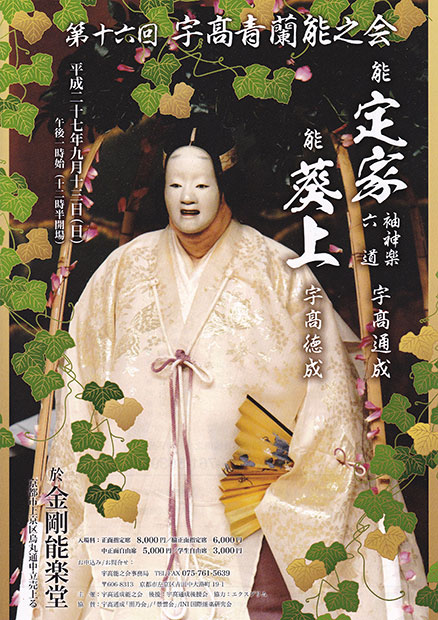
This year’s Udaka Seiran Noh will feature the Noh plays Teika and Aoi-no-ue.

In the Noh Teika, performed by INI founder Udaka Michishige, a Priest is led to a vine-covered grave by a Woman he meets when sheltering from a passing autumn shower. It is the grave of poet Shokushi Naishinno, third daughter of Emperor Go-Shirakawa and the vines are called “Teika-kazura” after the poet Fujiwara no Teika. The story of their romance and  lingering attachment unfolds as the Woman reveals that she is the ghost of Shokushi Naishinno. Teika belongs to a group of Noh plays that only very experienced plays are allowed to perform, hence this is going to be a very rare opportunity for those in the Kansai area to come see the play, which is going to be staged with the added special variations sode-kagura and shinto.

Aoinoue, performed by Michishige’s younger son, Norishige

View original post 214 more words

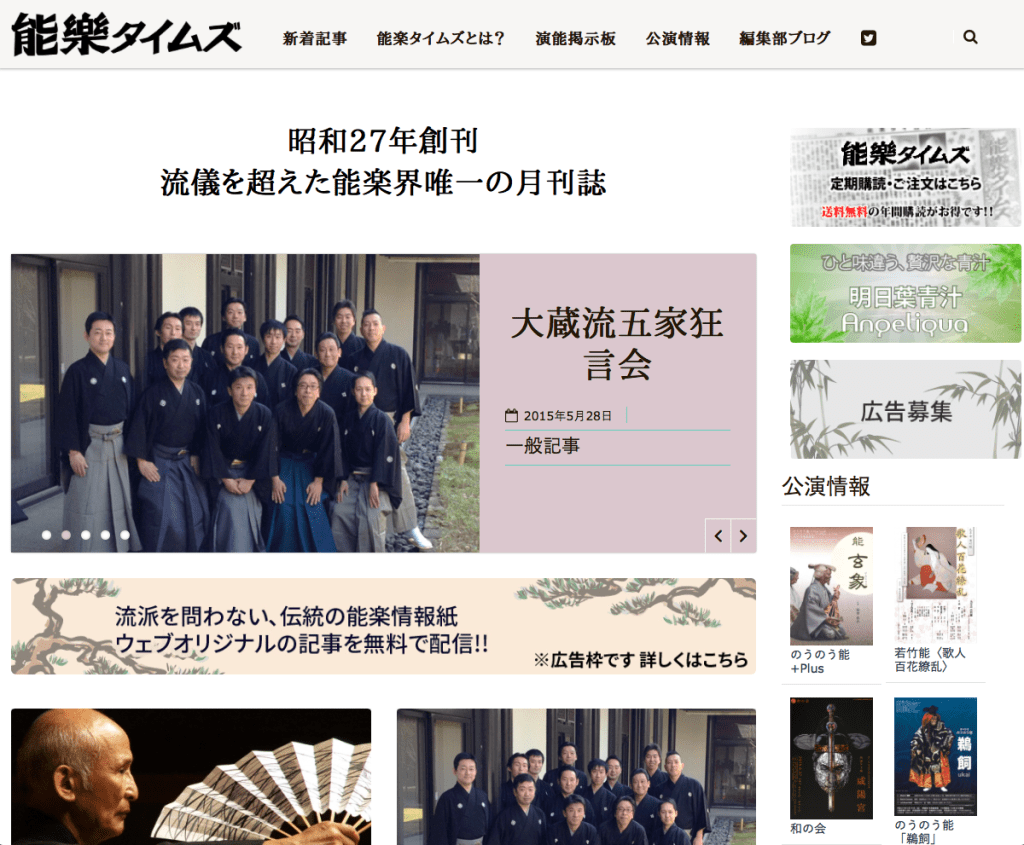
New Nogaku Times website

Nogaku Shorin, publisher of the Nogaku Times, the most popular monthly tabloid reporting on the world of Noh with interviews, essays and performance ‘reviews’ (or ‘reports’, as they should be called) has finally made the move toward digitalisation launching the Nogaku Times website. While I believe most of the contents will still be available only in the paper publication, it is encouraging to notice a sign of ‘modernisation’ (it’s 2015…) of the methods for diffusing news on Noh.

Screen Shot 2015-05-29 at 14.52.03

Tadasu Kanjin Noh 2015

Hello! I apologise to my readers for not having written much in a long time. I am working on multiple research projects at the moment besides teaching and writing duties as always. Anyway I though I would take five just to share my excitement about attending the Tadasu Kanjin Noh at Shimogamo Shrine this Saturday 30th of May 2015. I would love to tell you more about the place, the play and the importance of kanjin (subscription) performances in Noh but, alas, no time for that. Just a few key features: open air performance; hashigakari bridge installed behind the musicians as it was in the olden days (a long long time ago); the iemoto of the Kanze School (Kanze Kiyokazu) dances the Noh Kamo with an impressive lineup of top-notch performers; it is expensive but the money goes towards the renovation of the Shimogamo Shrine.

What I am going to do in place of extensive writing is to shamelessly copy/paste the English info on the organisers’ website so that people in the area who are interested can easily find their way to the booking system.

Tadasu Kanjin Noh

Commemorating the 34th renovation of Shimogamo shrine
and the 550th anniversary of Tadasugawara Kanjin Sarugaku performance

Noh: Kamo
Performed by: Kanze Kiyokazu (head of the Kanze school)
Place: Shimogamo Shrine
Date and time: May 30 (Sat), 6 PM (doors open 5 PM)

Situated on the north eastern (inauspicious) side of the ancient capital, the Tadasu area was traditionally a place for conducting purification ceremonies. Tadasu no Mori (literally “Forest of Correction”), Shimogamo Shrine’s sacred grove, was believed to be a residence of a guardian deity which “corrects” (tadasu) the malign influences. 550 years ago, there was a famous performance of Sarugaku (a precursor of Noh) held at the Tadasu area for the purpose of temple solicitation. For Shimogamo shrine, 2015 is a year of “Shikinen Sengu”, a renovation which is done according to an ancient tradition every 21 years. Let’s take this important year as an opportunity to once again feel the beauty of Japanese culture.

Information about the Performance

【Tickets】
S Seats 10,000 Yen
A Seats 5000 Yen
Special Seats 30,000 Yen (seating at a historical Important Cultural Property building)
Front Seats 20,000 (closest to the stage)

Organized by: Committee for the revival of Tadasu Sarugaku (Shimogamo Shrine, Kyoto Shimbun, Yuhisai Kodokan)
Reservations & Inquiries: TEL: 075-781-0010 E-mail: tadasu-noh@kodo-kan.com

Buying Tickets