Udaka Tatsushige’s TEDxKyotoUniversity talk on Noh is finally available with English subtitles! Enjoy and let us know what you think!
Noh, a classical Japanese musical drama, is not just what you see with your eyes, but what see with your mind too! This talk/performance will show you that in interpreting Noh, imagination is your limit!
Tatsushige Udaka was born in Kyoto, and started his career in Kokata acting from the young age of three years old. He was trained by the 26th head of the Kongo School, Hinasori KONGO, as well as by his father, Michishige UDAKA. Performing since he was young, he has had extensive stage and teaching experience in Noh Threatre. He has travelled, performed, taught, and demonstrated Noh in Japan, South Korea, France, and the United States throughout the last decade. Currently, he is based in Kyoto.
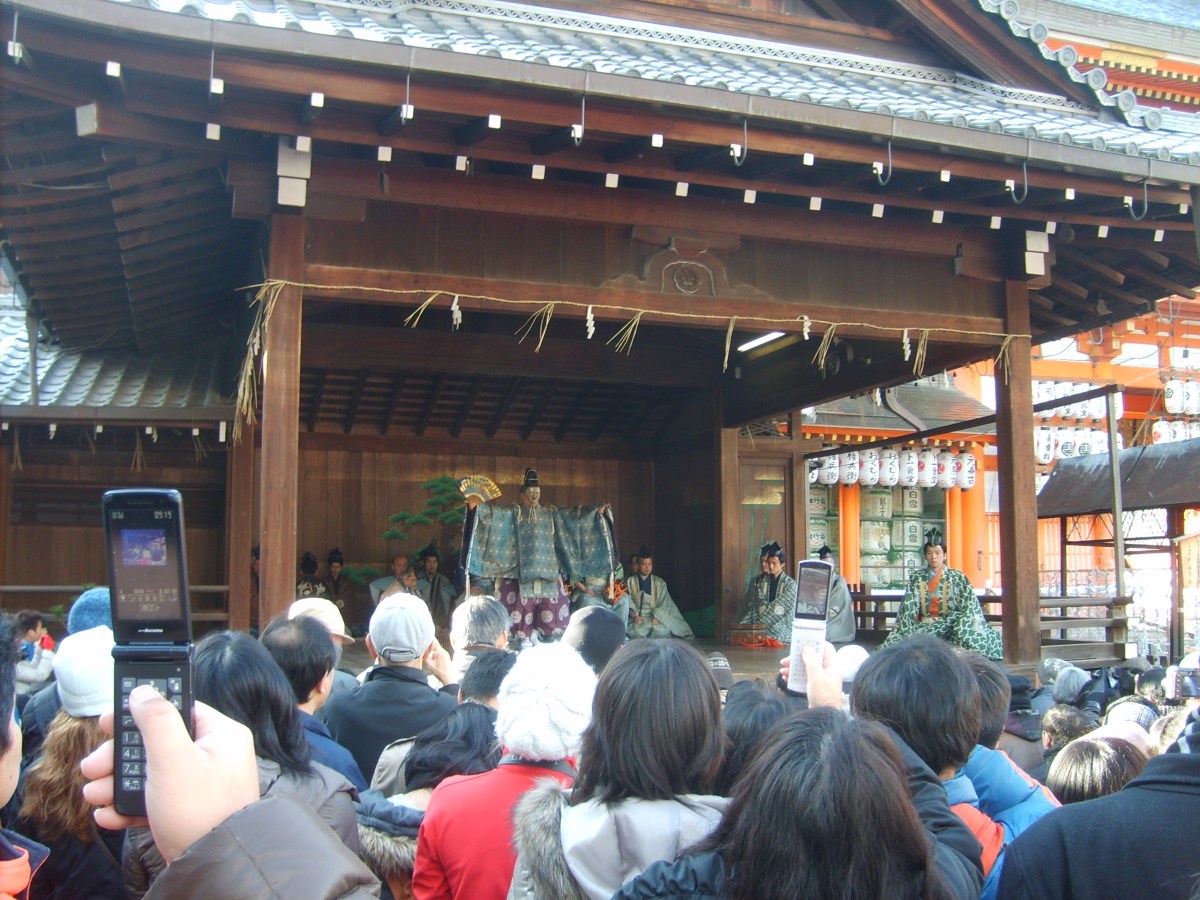
The New Year period is a busy time for Noh actors! Augural plays wishing long life and happiness are performed at various locations, especially Shinto shrines. If you are in Kyoto during the first week of January 2016, I recommend that you check out these FREE Noh performances.
Link to a (partial) performance calendar of the Kongo school here)
January 1st Friday from 12:30 @Heian Shrine. Ritual Noh performance. Okina. Shite: Kongo Hisanori.
January 3rd Sunday from 09:00 @Yasaka Shrine. Okina. Shite: Katayama Kuroemon. Shimai: Tsurukame. Shite: Kongo Hisanori.
January 3rd Sunday from 12:30 @Kongo Noh theatre. First performance of the year. Recitation of the chant of Okina, shimai and maibayashi (Iwafune Shite: Kongo Tatsunori).
JPARC – Japanese Performing Arts Resource Center Lecture Series
ARC – Art Research Center, Ritsumeikan University
Symposium and Performance Demonstration
Interactive Interplay: Waki and Ai-Kyōgen Roles in Noh
Date November 17, 2015 15:00-20:00
Place: Ritsumeikan University, Kinugasa Campus. Art Research Center. Multipurpose room.。
This event consists of two parts. The afternoon symposium (in English with discussion in Japanese) will address the importance of waki and ai-kyōgen roles in late-Muromachi period noh with reference to building an interactive text of the play Funa Benkei for the JPARC database. In the evening demonstration (in Japanese), kyōgen and waki actors will discuss their roles in Funa Benkei, and perform portions of the play.
Symposium 15:00-17:30
15:00
Opening
15:20
Presentation (in English): ” Important auxiliary characters – the case of Funa Benkei and late Muromachi noh plays” by Dr. Lim Beng Choo, National University of Singapore
15:50
Presentation (in English): “The sonic comic: How kyōgen actors create a scenic soundscape” by Dr. Jonah Salz, Ryukoku University
16:30
Break
16:50
Presentation (in English): “Traditional Japanese Theater Websites and the Aims of the JPARC Website” by Dr. Diego Pellecchia
17:10
Round Table Discussion (in Japanese and English) “Purpose, Problems, and Perspectives on Creating Bilingual Interactive Texts, the case of Funa Benkei.” Discussants: Akama Ryō, Diego Pellecchia, Monica Bethe, others
17:40
Break (light refreshments will be provided)
Performance demonstration (in Japanese) 18:30-20:00
“Waki and Kyōgen Players in Late Medieval Noh, the case of Funa Benkei.”
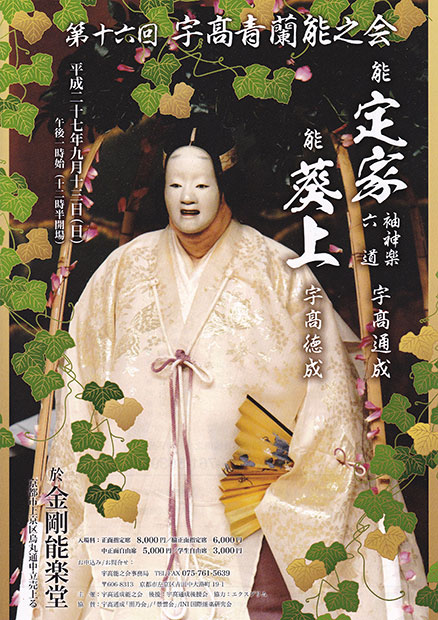
This year’s Udaka Seiran Noh will feature the Noh plays Teika and Aoi-no-ue.
In the Noh Teika, performed by INI founder Udaka Michishige, a Priest is led to a vine-covered grave by a Woman he meets when sheltering from a passing autumn shower. It is the grave of poet Shokushi Naishinno, third daughter of Emperor Go-Shirakawa and the vines are called “Teika-kazura” after the poet Fujiwara no Teika. The story of their romance and lingering attachment unfolds as the Woman reveals that she is the ghost of Shokushi Naishinno. Teika belongs to a group of Noh plays that only very experienced plays are allowed to perform, hence this is going to be a very rare opportunity for those in the Kansai area to come see the play, which is going to be staged with the added special variations sode-kagura and shinto.
Aoinoue, performed by Michishige’s younger son, Norishige…
Wakate Noh – young Noh and Kyogen performers from the Kanze, Kongo and Okura schools will perform on the Kanze Kaikan stage on Saturday 27 June 2015 from 11:00. Udaka Tatsushige will take the shite in the Noh Miwa, the first play in the schedule,featuring the kagura instrumental dance. Feel free to contact me for more details and/or tickets.
Hello! I apologise to my readers for not having written much in a long time. I am working on multiple research projects at the moment besides teaching and writing duties as always. Anyway I though I would take five just to share my excitement about attending the Tadasu Kanjin Noh at Shimogamo Shrine this Saturday 30th of May 2015. I would love to tell you more about the place, the play and the importance of kanjin (subscription) performances in Noh but, alas, no time for that. Just a few key features: open air performance; hashigakari bridge installed behind the musicians as it was in the olden days (a long long time ago); the iemoto of the Kanze School (Kanze Kiyokazu) dances the Noh Kamo with an impressive lineup of top-notch performers; it is expensive but the money goes towards the renovation of the Shimogamo Shrine.
What I am going to do in place of extensive writing is to shamelessly copy/paste the English info on the organisers’ website so that people in the area who are interested can easily find their way to the booking system.
Tadasu Kanjin Noh
Commemorating the 34th renovation of Shimogamo shrine and the 550th anniversary of Tadasugawara Kanjin Sarugaku performance
Noh: Kamo Performed by: Kanze Kiyokazu (head of the Kanze school) Place: Shimogamo Shrine Date and time: May 30 (Sat), 6 PM (doors open 5 PM)
Situated on the north eastern (inauspicious) side of the ancient capital, the Tadasu area was traditionally a place for conducting purification ceremonies. Tadasu no Mori (literally “Forest of Correction”), Shimogamo Shrine’s sacred grove, was believed to be a residence of a guardian deity which “corrects” (tadasu) the malign influences. 550 years ago, there was a famous performance of Sarugaku (a precursor of Noh) held at the Tadasu area for the purpose of temple solicitation. For Shimogamo shrine, 2015 is a year of “Shikinen Sengu”, a renovation which is done according to an ancient tradition every 21 years. Let’s take this important year as an opportunity to once again feel the beauty of Japanese culture.
【Tickets】 S Seats 10,000 Yen A Seats 5000 Yen Special Seats 30,000 Yen (seating at a historical Important Cultural Property building) Front Seats 20,000 (closest to the stage)
Organized by: Committee for the revival of Tadasu Sarugaku (Shimogamo Shrine, Kyoto Shimbun, Yuhisai Kodokan)
Reservations & Inquiries: TEL: 075-781-0010 E-mail: tadasu-noh@kodo-kan.com
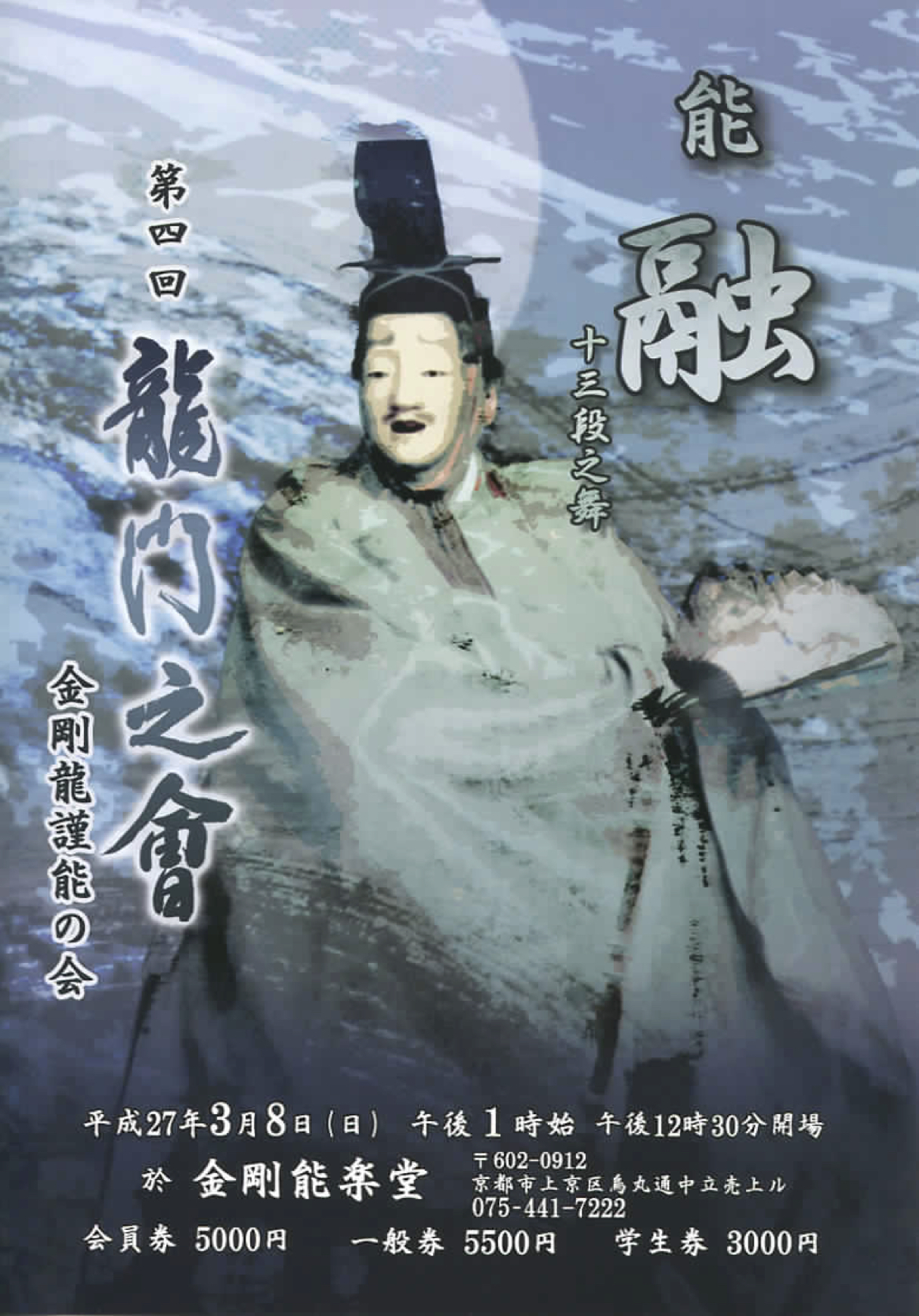
On Sunday 8th March 2015 at the Kongo Nogakudo, on the occasion of the fourth Ryumon no kai event, Kongo Tatsunori, son of the Iemoto Kongo Hisanori is going to perform the Noh Toru in the special variation Jusandan-no-mai.
The Minister Minamoto-no-Toru, son of Emperor Saga, who built a magnificent villa in Kyoto called Kawara-no-in where he created a replica of the salt kilns of Shiogama in present day Miyagi prefecture. Toru is a highly evocative and dramatic Noh with a noble dance in the Jusandan-no-mai, Dance in Thirteen Movements variation, at the end of the Noh, in which the standard five movement dance is repeated in the Banshiki mode related to the element water, closing with three movements of the Kyu-no-mai, Rapid Dance.
The 4th Ryumon-no-kai
Time: Sunday 8th March 2015 from 13:00 (doors open at 12:30)
Place: The Kongo Noh Theatre Nakadachiuri-agaru, Karasuma-dori, Kamigyo-ku, Kyoto. 602-0912. Subway Karasuma-Imadegawa (K06), South Exit (n.6). Walk South 300m. MAP >>
Tickets: regular admission 5,500yen, students 3,000yen
Young actor Tatsushige Udaka makes his debut in the vendetta play Mochizuki. I bet you never thought that Noh could be so AMAZING. Come see for yourself on March 14th.
On 14 March 2015 Udaka Tatsushige (first son of the INI founder Udaka Michishige) will hold the first Tatsushige no Kai, an annual Noh performance event he is producing, featuring high-caliber actors and musicians. Each year Tatsushige is going to take the main role in a particularly challenging play from the Kongo school repertoire. On the occasion of this first Tatsushige no Kai, Kongo Hisanori, grand-master of the Kongo School, has chosen for him the virtuoso Noh playMochizuki. Family tickets and ‘next generation’ tickets for students and Noh theatre beginners are available! Check out the full program in English here!
Mochizuki: March 14th 2015, 14:00-17:00 – Kongo Noh Theatre, Kyoto
Mochizuki: the story
Mochizuki tells a story of revenge, celebrated in classical Japanese literature as an example of loyalty and selflessness in the face of injustice. Lord Tomoharu was assassinated…
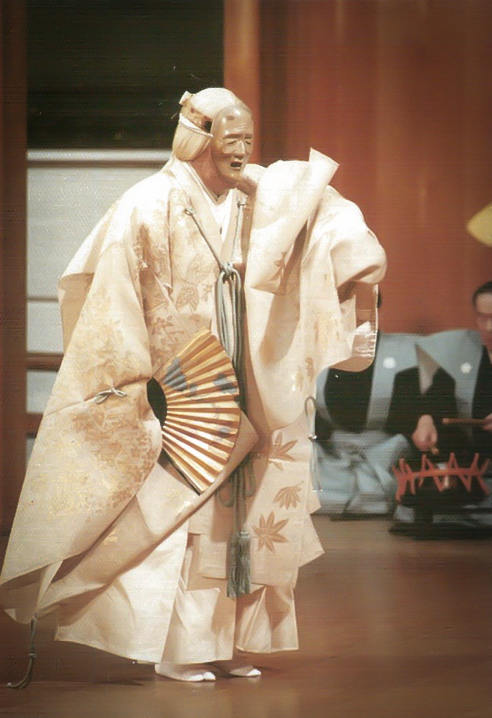
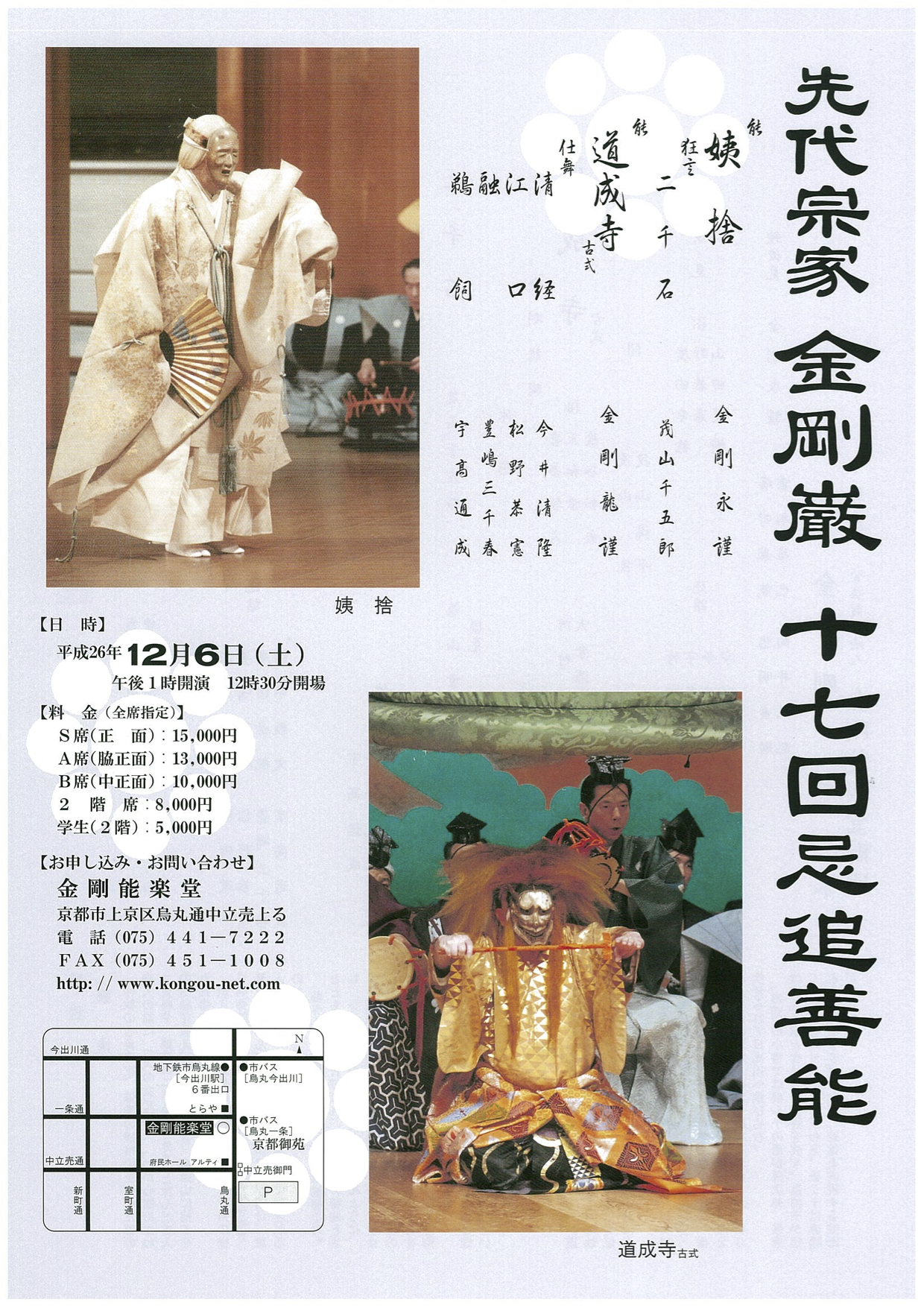
On Saturday 6th December 2014 from 13:00 to 17:00 the 17th Memorial Performance commemorating the late Iemoto (Head Master) Kongo Iwao II will take place at the Kongō Noh Theatre in Kyoto. This exceptional event will feature two special plays: Obasute, starring the current Iemoto, Kongō Hisanori, and Dōjō-ji (koshiki version) starring his son, Kongō Tatsunori. (See full program below. If you are interested in purchasing a ticket, contact me here).
Obasute
Obasute, by Zeami Motokiyois one of the highest ranking plays in the Noh repertoire, and is based on the ancient Japanese legend of obasute-yama, a mountain where the elderly were abandoned by their own relatives, and left there to die. The legend of obasute-yama has been popularised by the famous film The Ballad of Narayama by Kinoshita Keisuke (1958 remade by Imamura Shōhei in 1983). In the Noh play Obasute, the spirit of a woman who was abandoned on Obasute-yama appears to a traveller who is visiting the area, and describes how her loneliness prevent her to break away from her attachments to this world and reach enlightenment. The play is pervaded by the imagery of the full moon, a buddhist symbol of enlightenment, also associated to the Seishi-bosatsu, Bodhisattva of Wisdom and companion of Buddha Amida.
Kongo Dōjōji koshiki
The story of Dōjō-ji is well known in Japan, also because of its Kabuki rendition. The play tells the story of a young woman whose impossible love for a monk transforms her into a deadly monster. After having learned about the girl’s feelings, the man finds refuge in a temple, where monks hide him under the bell. Realising his hiding spot, the woman, now transfigured into a monstrous snake, wraps herself around the bell. As her own snake-body burns with deadly passion, the bell melts along with the man hiding underneath. Years after this accident, a ceremony is held to celebrate a the rising of a new bell. The Abbot has prohibited women to enter the temple precincts, but a young and attractive girl comes knocking at the gates… This
17th Kongo Iwao II Memorial Performance
Time: Saturday 6th December 2014 – 13:00 to 17:00. Doors open at 12:30.
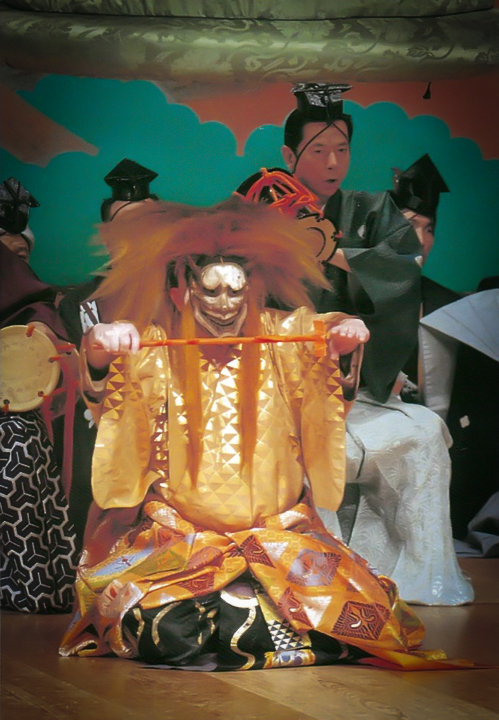
Udaka Tatsushige, son of the INI leader Michishige, will perform the virtuoso Noh Mochizuki on March 14th 2015 on the occasion of the first Tatsushige-no-kai series performance event. Mochizuki is a dramatic vendetta story featuring the famous lion dance, normally associated with the Noh Shakkyō, here performed by a man wearing a lion wig, golden fangs symbolising the lion’s jaws, and a red cloth to cover his face. You can watch here the promotional video of the event below.
Speaking of Mochizuki, this is a Meiji-period colour photograph of an actor dressed for the role of Kozawa no Gyōbu Tomofusa, the main character of the play, part of Albert Kahn’s Archives of the Planet.











 The Noh Diaries